
8 Best Flooring for Home Gym Picks, Matched to What You Drop in 2026
As an Amazon Associate, this website earns from qualifying purchases.
The short answer
For most home gyms, the ProsourceFit 3/4-inch puzzle mat is the best all-round floor. Step down to the 1/2-inch tile for bodyweight work, and step up to a 3/4-inch rubber stall mat like the DWC mat if you drop loaded barbells.
Last updated September 2026
Contents16
- #1. ProsourceFit 3/4-inch Puzzle Mat: best all-round home gym floor
- #2. ProsourceFit 1/2-inch Puzzle Mat: best for bodyweight and yoga corners
- #3. ProsourceFit 1-inch Puzzle Mat: best thick foam for heavy gear
- #4. Rubber-Cal Eco-Sport Tiles: best interlocking rubber tile
- #5. DWC 4 x 6 ft Rubber Mat: best for barbell drops
- #6. Rubber-Cal Elephant Bark Roll: best rubber roll for wall-to-wall cover
- #7. American Floor Mats Stall Tiles: best rubber squares for a garage
- #8. SuperMats 30GS Equipment Mat: best under cardio machines
- Factors to consider when choosing flooring for home gym use
- How we picked flooring for home gym setups
- Why no single floor wins every room
- Common mix-ups about home gym floors
- Mixing two floors in one room
- Setting up and caring for a home gym floor
- More in this guide
- Our verdict on flooring for home gym setups
Our top 8 picks
- 1Best all-round home gym floor
 ProsourceFit 3/4-inch Extra Thick Exercise Puzzle Mat
- Six 24 x 24 in tiles plus 12 end borders cover 24 sq ft
- High-density 3/4-inch EVA foam, free of phthalates
- Textured non-skid top, water resistant and noise reducing
- 2Best for bodyweight and yoga corners
 ProsourceFit 1/2-inch Exercise Puzzle Mat (24 Tiles)
- High-density EVA foam tiles, 24 x 24 in and 1/2 in thick
- 24 tiles with end borders cover 96 sq ft
- Non-skid, water-resistant surface that cleans with mild soap
- 3Best thick foam for heavy gear
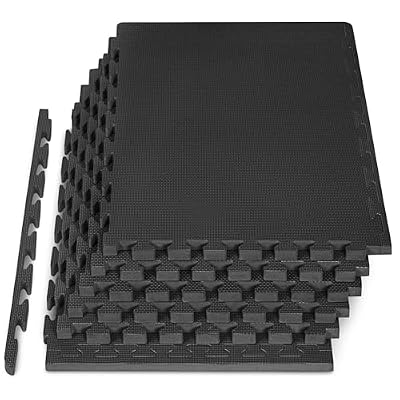 ProsourceFit Extra Thick Exercise Puzzle Mat, 1-inch
- High-density EVA foam tiles, 24 x 24 in and 1 in thick
- 6 tiles and 12 end borders cover 24 sq ft
- Listing warns the surface can compress under heavy equipment
- 4Best interlocking rubber tile
 Rubber-Cal Eco-Sport Interlocking Rubber Tiles, 3/4 in
- 3/4-inch interlocking rubber tiles, 19.5 x 19.5 in each
- 10-pack covers about 28 sq ft
- Pitched for wet, high-traffic areas like gym floors and basements
- 5Best for barbell drops
 DWC 4 x 6 ft Rubber Mat, 3/4 in
- 3/4-inch recycled tire rubber, 4 x 6 ft
- About 115 lb per mat
- Cuts with a razor or box cutter; made in Canada
- 6Best rubber roll for wall-to-wall cover
 Rubber-Cal Elephant Bark 3/8-inch Rubber Flooring Roll
- 3/8 in x 4 ft x 8 ft sheet
- Made from recycled tire rubber
- For gym floors, equipment mats and basements, indoors or out
- 7Best rubber squares for a garage
 American Floor Mats Heavy Duty Stall Tiles, 3/4 in (Set of 9)
- Nine 2 x 2 ft rubber tiles, 0.75 in thick
- Set covers a 6 x 6 ft area
- Wipes or brushes clean
- 8Best under cardio machines
 SuperMats 30GS Heavy Duty Equipment Mat
- Non-slip mat made to sit under cardio machines
- Sized for treadmills, ellipticals, rowers and bikes
- Protects the floor under larger machines
Flooring for home gym use is not one product. It is a thickness and material choice, and the right answer depends on what sits on top and what room it goes in. A yoga and dumbbell corner, a squat rack and a garage slab all need different floors, even on the same budget.
The eight picks below run from light foam tile to dense rubber stall mats. Each one covers a different load. Start with the heaviest thing you will lift or drop, then read down the list until a pick fits.
#1. ProsourceFit 3/4-inch Puzzle Mat: best all-round home gym floor
ProsourceFit 3/4-inch Extra Thick Exercise Puzzle Mat
Our verdict:
Best all-round home gym floor
Best for a bench with dumbbells and regular strength work in a spare room.
View on Amazon- Six 24 x 24 in tiles plus 12 end borders cover 24 sq ft
- High-density 3/4-inch EVA foam, free of phthalates
- Textured non-skid top, water resistant and noise reducing
Keep in mind: foam can dent under a rack that sits in one spot for years.
Product details checked September 2026
Standout: ProSource calls this the tier to step up to once heavier gear sits on the floor (ProSource). It covers 24 square feet in six 24 x 24 inch tiles with edge borders. See how it compares with the thinner tier in best flooring for home gym.
#2. ProsourceFit 1/2-inch Puzzle Mat: best for bodyweight and yoga corners
ProsourceFit 1/2-inch Exercise Puzzle Mat (24 Tiles)
Our verdict:
Best for bodyweight and yoga corners
Best for stretching, yoga, bodyweight work and light dumbbells.
View on Amazon- High-density EVA foam tiles, 24 x 24 in and 1/2 in thick
- 24 tiles with end borders cover 96 sq ft
- Non-skid, water-resistant surface that cleans with mild soap
Keep in mind: ProSource itself points you to a thicker tile once heavier gear goes on it.
Product details checked September 2026
Standout: it is the lightest tile to cut and carry, and it lifts up again in seconds. For a corner that only sees mat work, it does the job without a tall step at the edge. The pick is the 24-tile pack, which covers 96 square feet with end borders, enough for a whole spare-room floor. The listing describes high-density EVA foam with no phthalates and a water-resistant surface that cleans with warm water and dish soap.
#3. ProsourceFit 1-inch Puzzle Mat: best thick foam for heavy gear
ProsourceFit Extra Thick Exercise Puzzle Mat, 1-inch
Our verdict:
Best thick foam for heavy gear
Best for a room with heavy gear where you still want light, easy-to-cut foam.
View on Amazon- High-density EVA foam tiles, 24 x 24 in and 1 in thick
- 6 tiles and 12 end borders cover 24 sq ft
- Listing warns the surface can compress under heavy equipment
Keep in mind: the listing warns that surface compression can happen under heavy equipment.
Product details checked September 2026
Standout: ProSource rates its 1-inch tier for ultra-heavy gear and high-traffic areas like large gyms (ProSource). It is the top of the foam range before you move to rubber.
#4. Rubber-Cal Eco-Sport Tiles: best interlocking rubber tile
Rubber-Cal Eco-Sport Interlocking Rubber Tiles, 3/4 in
Our verdict:
Best interlocking rubber tile
Best for anyone who wants tile you can lift piece by piece, but in dense rubber.
View on Amazon- 3/4-inch interlocking rubber tiles, 19.5 x 19.5 in each
- 10-pack covers about 28 sq ft
- Pitched for wet, high-traffic areas like gym floors and basements
Keep in mind: each tile is heavier than foam, so a full room takes more effort to lay.
Product details checked September 2026
Standout: 3/4-inch rubber tiles that lock together, with the maker pitching them for wet, high-traffic areas like gym floors and basements. You get rubber's resistance to dents with tile's easy repairs.
#5. DWC 4 x 6 ft Rubber Mat: best for barbell drops
DWC 4 x 6 ft Rubber Mat, 3/4 in
Our verdict:
Best for barbell drops
Best for a lifting zone under a rack where loaded bars come down.
View on Amazon- 3/4-inch recycled tire rubber, 4 x 6 ft
- About 115 lb per mat
- Cuts with a razor or box cutter; made in Canada
Keep in mind: at about 115 lb per mat, it is a two-person carry.
Product details checked September 2026
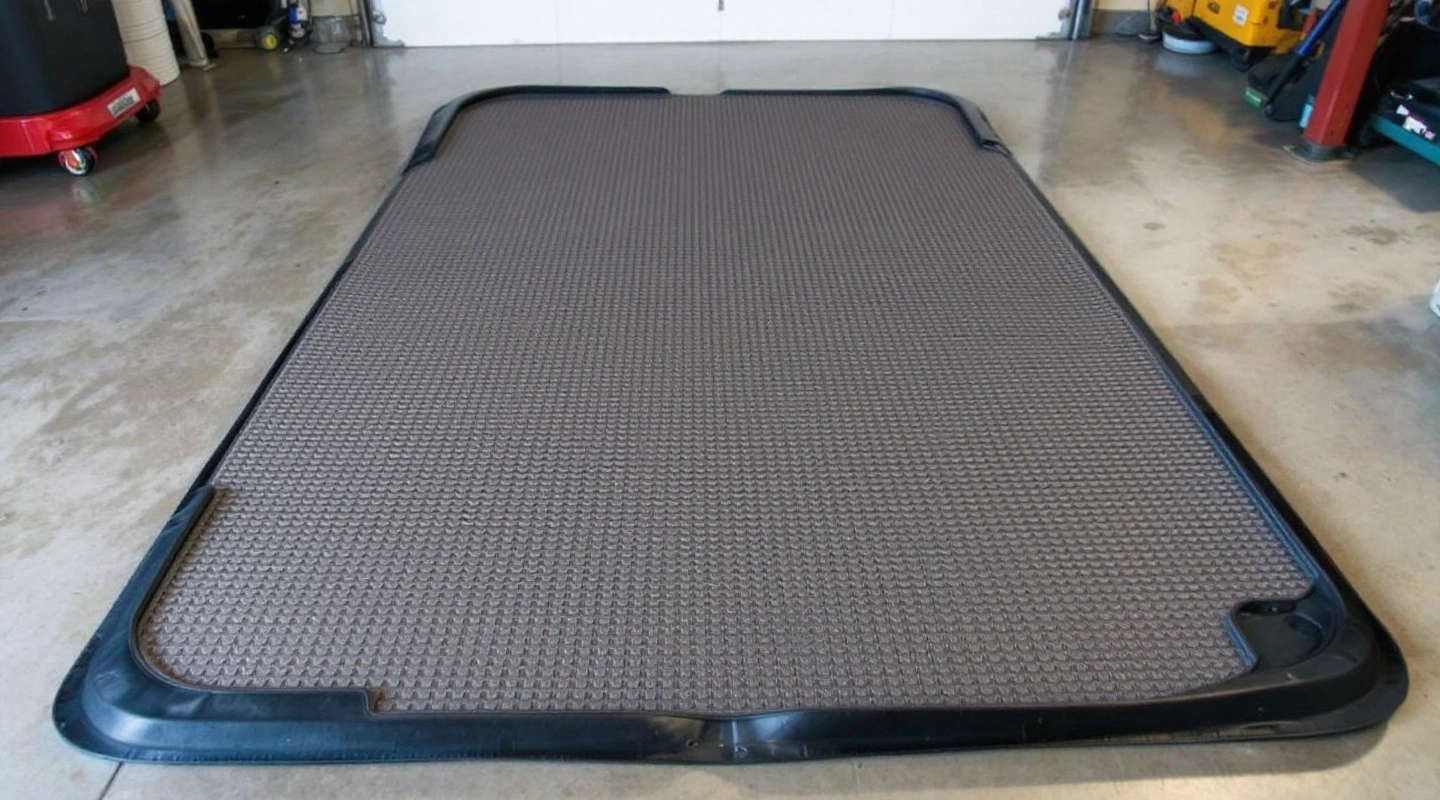
Standout: a 3/4-inch recycled tire rubber mat of the kind lifting gyms use. You can cut it with a box cutter to fit around posts. Two or three of these under a rack cover the drop zone without flooring the whole room in rubber.
#6. Rubber-Cal Elephant Bark Roll: best rubber roll for wall-to-wall cover
Rubber-Cal Elephant Bark 3/8-inch Rubber Flooring Roll
Our verdict:
Best rubber roll for wall-to-wall cover
Best for a basement or bonus room you want covered with few seams.
View on Amazon- 3/8 in x 4 ft x 8 ft sheet
- Made from recycled tire rubber
- For gym floors, equipment mats and basements, indoors or out
Keep in mind: at 3/8 inch it suits general training, not a heavy drop zone.
Product details checked September 2026
Standout: a 4 x 8 foot sheet of recycled tire rubber. Rubber-Cal describes it as moisture and mold resistant and safe to hose down (Rubber-Cal). See the garage gym flooring guide if the roll is going over concrete.
#7. American Floor Mats Stall Tiles: best rubber squares for a garage
American Floor Mats Heavy Duty Stall Tiles, 3/4 in (Set of 9)
Our verdict:
Best rubber squares for a garage
Best for a garage floor where you want stall-mat rubber in pieces one person can move.
View on Amazon- Nine 2 x 2 ft rubber tiles, 0.75 in thick
- Set covers a 6 x 6 ft area
- Wipes or brushes clean
Keep in mind: a set of nine covers only 36 square feet, so big rooms need several sets.
Product details checked September 2026
Standout: stall-mat rubber cut into 2 x 2 foot, 3/4-inch tiles. You get the density of a horse mat without having to wrestle a 4 x 6 sheet through a door.
#8. SuperMats 30GS Equipment Mat: best under cardio machines
SuperMats 30GS Heavy Duty Equipment Mat
Our verdict:
Best under cardio machines
Best for a treadmill, rower, bike or elliptical on a finished floor.
View on Amazon- Non-slip mat made to sit under cardio machines
- Sized for treadmills, ellipticals, rowers and bikes
- Protects the floor under larger machines
Keep in mind: it is made to sit under a machine, not to take dropped weights.
Product details checked September 2026
Standout: a single mat sized for large cardio machines. It keeps a treadmill or rower from marking a wood or carpet floor, which a strength tile does not always handle well.
Factors to consider when choosing flooring for home gym use
Four things decide the right floor. They are thickness, material, format plus the room itself. Get those four right and the brand matters much less.
Thickness and what each tier suits
ProSource spells out its tiers plainly. The 1/2-inch tile suits general exercise with standard gear. The maker says to step up to the 3/4-inch tile once heavier equipment sits on it (ProSource). It describes the 3/4-inch tile as the choice for workouts and medium-traffic areas, able to take heavy exercise gear. The 1-inch tile goes a step further, for ultra-heavy gear and busy spaces like large gyms (ProSource).
Match the tier to your heaviest real load:
- Bodyweight, yoga, light dumbbells: the 1/2-inch foam tier.
- An adjustable bench, moderate dumbbells, general strength work: 3/4-inch foam or a rubber tile.
- A squat rack, heavy plates or daily heavy use: 1-inch foam or rubber made for drops. Not every rubber roll qualifies, so check the exact thickness.
- A barbell drop zone, box jumps or atlas stones: the densest rubber tile or a stall mat.
Material: EVA foam or rubber
Material changes what a given thickness can handle. EVA foam (ProSource, BalanceFrom) is light and easy to cut and carry. Rubber (Rubber-Cal, DWC, American Floor Mats, Rogue, IRON COMPANY, SurfaceCo) is denser. Makers generally pitch rubber for gear that sits in one spot and for real impact.
Thickness still draws hard lines inside rubber. IRON COMPANY's own warranty language recommends only its 1/2-inch and 3/4-inch rolled rubber for heavy drop areas. It leaves its thinner 3/8-inch roll out of that use (IRON COMPANY).
Choosing a format
- Interlocking tile (ProSource, Rubber-Cal Eco-Sport, Rogue, IRON COMPANY GymLogix): pieces that lock together. You can replace one at a time, and tile is the easiest format to fit around posts or an odd room shape.
- Rolled rubber (Rubber-Cal, IRON COMPANY): wide sheets that cover a big room with fewer seams.
- Large mats (DWC, American Floor Mats, SurfaceCo): bigger single pieces than a tile. They are smaller and lighter than a full roll and made from the same dense rubber used in barns and trailers.
None of the three is always better. The trade-offs are room shape, whether you will ever replace a section, and how much seamless cover you want. Interlocking tile is the most forgiving for a rented space or a setup you expect to change. A roll makes sense once you commit to a large, mostly square room. A large mat sits between the two: fewer seams than tile, but still light enough for two people to place.
Under cardio machines
A treadmill or rower sits in one spot and vibrates while it runs. Check the machine's manual for what it says about flooring first. A dedicated equipment mat, like the SuperMats pick above, keeps the frame level and catches drips. Keep cardio machines off soft foam tiles, since the feet can sink and the frame can rock. If a machine sits at the edge of a foam floor, give it its own mat and butt the two edges together.
Shared rooms, kids and pets
If the gym doubles as a playroom or office, foam tiles are the easy choice. They are soft underfoot and come up in minutes. Rubber is better under a rack, but new rubber often smells for a while and heavy mats are hard to move. A small rubber zone under the heavy gear, with foam across the rest, works for both uses.
Foam tiles also help in a room where small children play, since a soft floor is kinder to a fall than laminate or concrete. Keep loose plates and dumbbells stored on a stand, though. A soft floor does nothing to stop a weight from tipping off a low shelf onto small feet.
What flooring protects against
Four benefits show up across the listings. Shock absorption cushions joints during bodyweight and cardio work, and it comes from the material itself.
Floor protection keeps wood or a finished floor from dents and stains. Noise and vibration control matters most in shared buildings. ProSource markets this as a design trait of its foam without giving a decibel number (ProSource), and none of the makers here publish one. Slip resistance comes from the surface texture. A wet or sweaty surface still loses grip, whatever the material.
Room and subfloor
A concrete slab is already rigid, so thinner tiers perform close to their stated use. A wood-frame floor over an occupied room raises the noise question, even with the same gear. Many listings say their tiles go down dry over concrete, wood, plus carpet. Confirm this on the exact product.
How much floor to order
Measure the footprint of the gear plus room to move around it. You don't need to cover the whole room unless you want wall-to-wall cover. Foam tile often comes in 24 square foot sets, so round up to the next full set. Spare tiles help with future cuts and repairs. Rolls and large mats come in bigger pieces, so check the roll length or mat size against the room before you order.
A worked example helps. A 10 x 12 foot room is 120 square feet. In 24 x 24 inch tiles, that is 30 tiles, or five six-tile sets. In 4 x 6 foot stall mats, it is five mats, since each covers 24 square feet. Add around 10 percent for cutting waste if you have posts or alcoves to fit around.
Weight and delivery
Foam is light enough that one person can carry a full set up the stairs. Rubber is a different job. DWC's listing puts its 4 x 6 foot, 3/4-inch mat at about 115 lb, so a room's worth of mats is several hundred pounds. Plan a second person and check door widths and stair turns before you order. If the route is tight, 2 x 2 rubber tiles, like the American Floor Mats set, give the same thickness in pieces you can carry alone.
Reading a flooring listing
Look for a number first. A listing that says "heavy duty" or "commercial grade" but never states a thickness, a material or a use is selling words, not specs. A photo of a barbell on a mat is not a drop rating. A "gym flooring" listing with only one thickness is usually a general product, fine for light work but not built across the light to heavy range.
How we picked flooring for home gym setups
We compared maker pages and Amazon listings for each product. We checked thickness and material. We also noted the format plus the use each maker states. Rogue, IRON COMPANY and SurfaceCo specs come from their own product pages and help explain the tiers. We did not test these floors by hand.
Every pick here has a current Amazon listing we checked. Specs and stock change, so read the current listing before you buy.
We left out carpet tile, vinyl plank and turf. They show up in some home gyms, but we did not find clear, checkable specs worth comparing here. If you are weighing one of those, get the thickness and stated use straight from that maker.
Why no single floor wins every room
Flooring depends on two things this page can't know for you: the heaviest gear that will sit on the floor, and the room's subfloor and shape. A page that named one best floor for everyone would be wrong for most readers. That is why the list spans foam, rubber tile, rubber roll and stall mats, and why the three guides below each take one slice of the choice.
Common mix-ups about home gym floors
Under a treadmill. The strength floors on this page focus on dumbbells, benches plus racks. Under a treadmill, a machine mat like the SuperMats pick fits better. Check the treadmill maker's own advice too.
Thicker is not always quieter. Thickness and material both play a part. A dense rubber mat at 3/4 inch can deaden impact noise better than a thicker, lighter foam tile. No maker here publishes decibel figures, so treat any noise percentage you see elsewhere with care.
Color does not change the rating. Color and pattern are looks only. Thickness and material set the use, not the finish.
Mixing two floors in one room
Many home gyms end up with two floors, and that is often the smart choice. A light foam tier covers most of the room, and a denser rubber zone sits under the rack or lifting spot. You pay for heavy rubber only where the heavy work happens.
Check how the two edges meet. Tiles from different product lines don't always lock together, and a step between a 1/2-inch foam tile and a 3/4-inch rubber mat can catch a toe. Put the thicker floor against a wall where you can, or use the edge borders that come with the foam set. A short run of rubber mats under a rack also stays put better when the foam around it holds it in.
Setting up and caring for a home gym floor
Foam and rubber tiles go down dry by hand. Start in one corner and work out, then trim the last row with a sharp utility knife. Large rubber mats cut the same way, though it takes a few passes with a fresh blade. Let a rubber roll relax flat in the room for a day before the final trim, since it can arrive curled.
New rubber often smells for a while. Airing the room helps, and a garage with the door open is the easiest place for that. Foam tiles clean with a damp mop and mild soap. Rubber-Cal describes its rubber roll as safe to hose down (Rubber-Cal), which suits a basement or garage better than a carpeted spare room.
Lift a tile every few months to check the floor under it, most of all on wood. Grit trapped under a mat can scratch a finish over time. Tile makes this check easy, since you can pop out one square and put it back.
More in this guide
- Best Flooring for Home Gym: the 1/2-inch versus 3/4-inch tile choice, plus rubber options for the same loads.
- Best Home Gym Flooring: the widest comparison, from foam tile to stall mats and machine mats.
- Flooring for Garage Gym: the same thickness logic plus concrete, cold-weather and drain questions.
Our verdict on flooring for home gym setups
The ProsourceFit 3/4-inch puzzle mat is the best all-round flooring for home gym rooms with a bench and dumbbells. Use the 1/2-inch tile for a bodyweight corner. For a rack and dropped bars, put a DWC rubber mat or American Floor Mats stall tiles under the lifting zone. Choose the Rubber-Cal roll when you want few seams across a big room.
Our picks in this topic
6 picks
6 Best Flooring for Home Gym Rooms: 1/2-Inch vs 3/4-Inch Tile in 2026
The best flooring for home gym rooms, built around the 1/2-inch versus 3/4-inch tile choice. Six picks in foam and rubber, compared by the use each maker states.
8 picks
8 Best Home Gym Flooring Options by Thickness and Use in 2026
The best home gym flooring, from foam puzzle tiles to rubber stall mats. Eight picks compared by thickness, material and the use each maker states.
6 picks
6 Best Flooring for Garage Gym Floors Over Concrete in 2026
Flooring for garage gym setups over bare concrete: six picks from rubber stall mats to thick foam tile, with the cold, drain and drop questions a garage adds.
Questions people also ask
Do I need the thickest flooring available?
Only if you drop heavy loads or run high-impact gear. ProSource's own guidance points you to the 3/4-inch tile over the 1/2-inch tile once heavier equipment sits on it, and saves the 1-inch tile for ultra-heavy gear and high traffic (ProSource).
Does thicker flooring protect a subfloor from any weight?
Only within the maker's own rating. A mat meant for standard use is not meant to take dropped heavy loads. Match the tile's stated use to what you do, and don't assume a thick-looking mat covers a job its maker doesn't claim.
Is interlocking tile the only flooring option?
No. Rolled rubber and large stall mats are the other common choices. Each comes in several thicknesses for the same reason: to match cushioning and drop resistance to the load.
Which guide on this site should I read next?
If you are choosing between the 1/2-inch and 3/4-inch tiers, read best flooring for home gym. For the widest comparison across tile, roll and stall mat, read best home gym flooring. If you are flooring a garage over bare concrete, read flooring for garage gym.
Can gym flooring go over carpet?
Many tile and roll listings say they can lie over carpet, concrete or wood. Check the exact product first. A thin, low-pile carpet behaves very differently under a mat than thick carpet with heavy padding.