
8 Best Home Gym Flooring Options by Thickness and Use in 2026
As an Amazon Associate, this website earns from qualifying purchases.
The short answer
The ProsourceFit 3/4-inch puzzle mat is the best home gym flooring for most rooms. For barbell drops, the DWC 4 x 6 ft rubber mat is the pick, and the Rubber-Cal Elephant Bark roll suits wall-to-wall rubber in a lighter-use room.
Last updated September 2026
Contents21
- #1. ProsourceFit 3/4-inch Puzzle Mat: best home gym flooring for most rooms
- #2. ProsourceFit 1/2-inch Puzzle Mat: best for light training
- #3. ProsourceFit 1-inch Puzzle Mat: best thick foam tile
- #4. BalanceFrom 3/4-inch Puzzle Mat: best foam alternative
- #5. Rubber-Cal Eco-Sport Tiles: best interlocking rubber tile
- #6. DWC 4 x 6 ft Rubber Mat: best for barbell drops and box work
- #7. American Floor Mats 4 x 6 ft Stall Mat: best US-made stall mat
- #8. Rubber-Cal Elephant Bark Roll: best rubber roll
- Factors to consider when choosing the best home gym flooring
- How we picked the best home gym flooring
- Matching these picks to real setups
- Room type changes the call
- Setup and care
- Mixing foam and rubber in one room
- Noise in flats and upper floors
- Odor and cleaning
- Buying second-hand mats and tiles
- Keeping the floor in good shape
- How to measure before you order
- Common mistakes to avoid
- Our verdict on the best home gym flooring
Our top 8 picks
- 1Best for most rooms
 ProsourceFit 3/4-inch Extra Thick Exercise Puzzle Mat
- Six 24 x 24 in tiles plus 12 end borders cover 24 sq ft
- High-density 3/4-inch EVA foam, free of phthalates
- Textured non-skid top, water resistant and noise reducing
- 2Best for light training
 ProsourceFit 1/2-inch Exercise Puzzle Mat (24 Tiles)
- High-density EVA foam tiles, 24 x 24 in and 1/2 in thick
- 24 tiles with end borders cover 96 sq ft
- Non-skid, water-resistant surface that cleans with mild soap
- 3Best thick foam tile
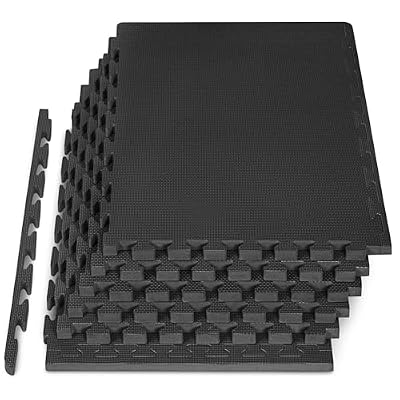 ProsourceFit Extra Thick Exercise Puzzle Mat, 1-inch
- High-density EVA foam tiles, 24 x 24 in and 1 in thick
- 6 tiles and 12 end borders cover 24 sq ft
- Listing warns the surface can compress under heavy equipment
- 4Best foam alternative
 BalanceFrom 3/4-inch Puzzle Exercise Mat
- Six 24 x 24 in tiles with 12 end borders cover 24 sq ft
- 0.75-inch high-density EVA foam
- Non-slip texture on both sides, cleans with soap and water
- 5Best interlocking rubber tile
 Rubber-Cal Eco-Sport Interlocking Rubber Tiles, 3/4 in
- 3/4-inch interlocking rubber tiles, 19.5 x 19.5 in each
- 10-pack covers about 28 sq ft
- Pitched for wet, high-traffic areas like gym floors and basements
- 6Best for barbell drops and box work
 DWC 4 x 6 ft Rubber Mat, 3/4 in
- 3/4-inch recycled tire rubber, 4 x 6 ft
- About 115 lb per mat
- Cuts with a razor or box cutter; made in Canada
- 7Best US-made stall mat
 American Floor Mats 3/4-inch Rubber Stall Mat, 4 x 6 ft
- Solid rubber, 3/4 inch thick, 4 by 6 feet
- Made in the US with no rubber substitutes
- Made for heavy equipment
- 8Best rubber roll
 Rubber-Cal Elephant Bark 3/8-inch Rubber Flooring Roll
- 3/8 in x 4 ft x 8 ft sheet
- Made from recycled tire rubber
- For gym floors, equipment mats and basements, indoors or out
The best home gym flooring depends on what goes on top of it. This page compares eight real products on the specs that decide fit. Those are thickness and material, plus what each maker says the product is for. No single floor wins every room.
The list runs from light foam tile to heavy rubber stall mats. Foam suits bodyweight work and moderate gear. Rubber takes over once you drop weight or leave heavy gear in one spot.
#1. ProsourceFit 3/4-inch Puzzle Mat: best home gym flooring for most rooms
ProsourceFit 3/4-inch Extra Thick Exercise Puzzle Mat
Our verdict:
Best for most rooms
Best for an adjustable bench, moderate to heavy dumbbells and regular training.
View on Amazon- Six 24 x 24 in tiles plus 12 end borders cover 24 sq ft
- High-density 3/4-inch EVA foam, free of phthalates
- Textured non-skid top, water resistant and noise reducing
Keep in mind: skip it for dropped plates or a squat rack, where rubber is the better call.
Product details checked September 2026
Standout: ProSource describes this denser tier as its pick for workouts and medium-traffic areas, able to take heavy exercise gear (ProSource). Six 24 x 24 inch tiles plus borders cover 24 square feet.
Three-quarter inch is the thickness most home rooms end up at, and there is a simple reason. It is thick enough that a bench foot or a dumbbell set down with control does not reach the hard floor underneath. It is still thin enough that a door, a rug edge or a step into the next room stays manageable. Each tile is 4 square feet, so the math is easy: a 6 x 8 foot training corner is 48 square feet, which is two six-tile sets.
Where it falls short is weight that never moves. A rack foot, a loaded plate tree or the rear legs of a heavy bench press into foam over weeks. The dent can stay after you move the gear. If that gear is part of the plan, put a small rubber mat under just that spot and keep the foam everywhere else.
#2. ProsourceFit 1/2-inch Puzzle Mat: best for light training
ProsourceFit 1/2-inch Exercise Puzzle Mat (24 Tiles)
Our verdict:
Best for light training
Best for bodyweight training and yoga, plus light dumbbell work.
View on Amazon- High-density EVA foam tiles, 24 x 24 in and 1/2 in thick
- 24 tiles with end borders cover 96 sq ft
- Non-skid, water-resistant surface that cleans with mild soap
Keep in mind: ProSource's own guidance is to size up once heavier gear goes on it.
Product details checked September 2026
Standout: the easiest tile here to cut and carry. It keeps the floor low and soft for mat work without extra bulk.
The pick here is the 24-tile pack. Each tile is 24 x 24 inches and 1/2 inch thick, so the pack covers 96 square feet with end borders included. That is enough for a full spare-bedroom floor rather than one corner. The listing describes high-density EVA foam with no phthalates, a non-skid texture and care with warm water and dish soap.
This is the right tier when the heaviest thing on the floor is you. Bodyweight work and yoga sit well on it. So do light dumbbells. The half inch gives your knees and elbows a softer surface than bare concrete or laminate without raising the floor much. It is also the easiest set to pull up and stack in a closet if the room has to go back to another use.
#3. ProsourceFit 1-inch Puzzle Mat: best thick foam tile
ProsourceFit Extra Thick Exercise Puzzle Mat, 1-inch
Our verdict:
Best thick foam tile
Best for a room with a rack or daily heavy use where you still want foam.
View on Amazon- High-density EVA foam tiles, 24 x 24 in and 1 in thick
- 6 tiles and 12 end borders cover 24 sq ft
- Listing warns the surface can compress under heavy equipment
Keep in mind: the listing warns of surface compression under heavy gear, and the height can get in the way in a mixed-use room.
Product details checked September 2026
Standout: ProSource rates this, its thickest foam tier, for ultra-heavy gear and high-traffic areas like large gyms (ProSource).
The six tiles in this pack are 24 x 24 inches and a full inch thick, with 12 end borders, and they cover 24 square feet. The listing is honest about the limit: it says the surface can compress under heavy equipment. It also suggests double-sided tape if you want the tiles to grip the floor harder. That tip is worth using on a smooth basement slab, where thick foam tiles can creep apart over time.
An inch of foam feels soft underfoot. That helps for kneeling work and for softening a dumbbell set down on the floor. It is less helpful for heavy standing lifts, where a soft surface can feel less stable than firm rubber. Use it for a padded zone, not as the base for a loaded squat.
#4. BalanceFrom 3/4-inch Puzzle Mat: best foam alternative
BalanceFrom 3/4-inch Puzzle Exercise Mat
Our verdict:
Best foam alternative
Best for anyone who wants a second 3/4-inch foam option to compare.
View on Amazon- Six 24 x 24 in tiles with 12 end borders cover 24 sq ft
- 0.75-inch high-density EVA foam
- Non-slip texture on both sides, cleans with soap and water
Keep in mind: as foam, it can dent under gear that never moves.
Product details checked September 2026
Standout: 0.75-inch high-density EVA tiles with non-slip texture on both sides. Six 24 x 24 inch tiles and 12 borders cover 24 square feet, and the listing says it cleans with soap and water.
BalanceFrom's set matches the ProSource 3/4-inch pack tile for tile: six 24 x 24 inch tiles, 0.75 inch high-density EVA foam and 24 square feet of cover. The difference the listing points to is the texture. It has non-slip texture on both sides, so either face can go up. That helps if one side wears or stains after a year of use.
Treat it as the second quote for the same job. If one brand is out of stock or you want a different look, the two sets swap for each other without changing your plan. Don't mix the two brands in one floor, though. Interlocking edges from different makers rarely line up, and a mismatched joint is where tiles lift.
#5. Rubber-Cal Eco-Sport Tiles: best interlocking rubber tile
Rubber-Cal Eco-Sport Interlocking Rubber Tiles, 3/4 in
Our verdict:
Best interlocking rubber tile
Best for anyone who wants to replace one damaged piece at a time, in rubber.
View on Amazon- 3/4-inch interlocking rubber tiles, 19.5 x 19.5 in each
- 10-pack covers about 28 sq ft
- Pitched for wet, high-traffic areas like gym floors and basements
Keep in mind: heavier to lay than foam, and the 19.5 inch size means more tiles per room.
Product details checked September 2026
Standout: 3/4-inch rubber tiles that lock together. The maker pitches them to absorb impact and shock, and for wet, high-traffic areas like gym floors.
These tiles are 19.5 x 19.5 inches, not 24 inches, and the listing puts a 10-pack at 28 square feet of coverage. Plan on more pieces per room than with a 2 x 2 tile, and do the count from the listed coverage rather than the tile size alone. The listing also pitches them for basements that flood and for outdoor patios, which tells you water will not ruin them.
Rubber tile is the middle path between foam and a stall mat. It is firmer than foam, so a heavy bench or a dumbbell rack does not sink into it the same way. It is also light enough per piece to lay alone, which a 4 x 6 mat is not. The Eco-Sport line comes in several colors. That matters more than it sounds if the room is shared with a play area or an office.
#6. DWC 4 x 6 ft Rubber Mat: best for barbell drops and box work
DWC 4 x 6 ft Rubber Mat, 3/4 in
Our verdict:
Best for barbell drops and box work
Best for a deadlift spot, lifting platform or rack zone.
View on Amazon- 3/4-inch recycled tire rubber, 4 x 6 ft
- About 115 lb per mat
- Cuts with a razor or box cutter; made in Canada
Keep in mind: at about 115 lb per mat, you need two people to move it.
Product details checked September 2026
Standout: 3/4-inch recycled tire rubber, the kind of mat lifting gyms lay down. It cuts with a razor or box cutter, so you can trim it around a post.
The listing puts each mat at about 115 lb and says it is made in Canada from recycled tires. It comes with a smooth or diamond surface. Smooth is easier to sweep and to set a bench on level. Diamond gives more grip for sled work or wet shoes. At 4 x 6 feet, one mat covers 24 square feet, which is about the size of a lifting spot with a bar and plates.
Two of these mats side by side make an 8 x 6 foot area. That fits a squat rack with room to step out, or a deadlift spot with space for the plates to land. Lay them with the long edges tight and let them settle for a day before you trim anything. Heavy rubber can relax a little once it is out of the roll or stack.
#7. American Floor Mats 4 x 6 ft Stall Mat: best US-made stall mat
American Floor Mats 3/4-inch Rubber Stall Mat, 4 x 6 ft
Our verdict:
Best US-made stall mat
Best for covering a large area under a rack in a few big pieces.
View on Amazon- Solid rubber, 3/4 inch thick, 4 by 6 feet
- Made in the US with no rubber substitutes
- Made for heavy equipment
- Wipes or brushes clean
Keep in mind: a single 4 x 6 mat is large and heavy, so plan a two-person carry.
Product details checked September 2026
Standout: a 3/4-inch solid black stall mat the maker says is made in the US with no rubber substitutes. It also pitches the mat for floor protection under heavy equipment.
The listing says liquids and solids wipe or brush off, which is what you want under a rack where chalk and sweat collect. Like the DWC mat, it is 4 x 6 feet and 3/4 inch thick, so the two can serve the same role. Pick on what you can get delivered and on the smell tolerance of your household, since new rubber often smells strong at first.
American Floor Mats also sells the same 3/4-inch rubber as 2 x 2 foot stall tiles, nine to a set, each covering 4 square feet. Tiles are the better buy when the path to the room has stairs or a tight turn. A single 4 x 6 mat can be a real problem to get down a basement stair.
#8. Rubber-Cal Elephant Bark Roll: best rubber roll
Rubber-Cal Elephant Bark 3/8-inch Rubber Flooring Roll
Our verdict:
Best rubber roll
Best for a garage or basement you want covered wall to wall with few seams.
View on Amazon- 3/8 in x 4 ft x 8 ft sheet
- Made from recycled tire rubber
- For gym floors, equipment mats and basements, indoors or out
Keep in mind: at 3/8 inch it is a general-use floor, and a roll is one piece, so you can't swap a single damaged section.
Product details checked September 2026
Standout: a 4 x 8 foot sheet of recycled tire rubber, pitched for gym floors and basements. Rubber-Cal describes it as moisture and mold resistant and safe to hose down (Rubber-Cal).
A 4 x 8 foot sheet covers 32 square feet in one piece. For a long, narrow garage bay, that means far fewer seams than tiles. At 3/8 inch, though, it is a general-use floor. It protects concrete from scuffs and gives a firmer surface than bare slab, but it is not made to take dropped loaded plates. Pair it with a thicker mat under the one spot where weight comes down.
Roll-style rubber can curl at the ends when it first comes out of its packaging. Lay it flat in a warm room for a day or two before you trim it to fit. Cutting it while it still curls leads to gaps once it relaxes.
Factors to consider when choosing the best home gym flooring
Four things matter more than brand. Thickness and material come first, then format plus the room.
Thickness and the maker's stated use
Match thickness to your heaviest real load, not the biggest number on sale. A room with only dumbbells and a bench doesn't need a 1.5-inch tile. Check the stated use, not just the thickness.
Three products in this space land at 3/8 to 1/2 inch: ProSource's 1/2-inch foam tile, IRON COMPANY's 1/2-inch GymLogix rubber tile and IRON COMPANY's 3/8-inch rolled rubber. They are not interchangeable. Foam and rubber behave differently under a steady load. Rubber tends to resist lasting dents from gear that sits in one spot. Foam is lighter and easier to cut, but it can take a lasting dent under the same weight.
Inside rubber, thickness still draws a line for drops. IRON COMPANY's warranty language says its 3/8-inch roll is not the main surface for dropping loaded plates. It points to the 1/2-inch and 3/4-inch versions of the same roll for that (IRON COMPANY).
Coverage math for each format
Most shoppers under-order. The fix is to do the math from the listed coverage of the exact set you are buying, not from the room size alone. Here is how the picks on this page work out:
- 24 x 24 inch tiles (ProSource, BalanceFrom, American Floor Mats stall tiles): each tile is 4 square feet. A six-tile set covers 24 square feet, and the ProSource 1/2-inch pack of 24 tiles covers 96.
- 19.5 x 19.5 inch rubber tiles (Rubber-Cal Eco-Sport): the listing puts a 10-pack at 28 square feet.
- 4 x 6 foot stall mats (DWC, American Floor Mats): 24 square feet per mat.
- 4 x 8 foot rubber sheet (Rubber-Cal Elephant Bark): 32 square feet per sheet.
Take a 10 x 12 foot spare room, which is 120 square feet. In 3/4-inch foam, that is 30 tiles, or five six-tile sets. In the ProSource 1/2-inch tile, one 96 square foot pack plus one small top-up covers it.
In stall mats, it is five 4 x 6 mats. In 4 x 8 rubber sheets, it is four sheets with some trimming, since 128 square feet is a little more than the room. Add around 10 percent for cutting waste if the room has posts, alcoves or a door frame to work around.
Weight, delivery and carrying
Foam tiles are light enough for one person to carry a whole set. Rubber is not. The DWC listing puts one 4 x 6 mat at about 115 lb, so five mats for a spare room is well over 500 lb of rubber. Plan the delivery point, the route to the room and a second person before the order arrives.
Two people can walk a 4 x 6 mat on its long edge, like carrying a door. Rolling a stall mat can leave a curve in it that takes days to flatten. If the route has stairs, rubber tiles are the safer buy, since each piece is small enough to carry alone.
Preparing the subfloor
Every floor on this page goes down dry, but what is under it still matters.
On concrete, vacuum the slab first, since grit under foam or rubber wears the underside and can show through.
Check the slab for high spots and cracks. A long level or a straight board shows you where the floor dips. If a basement slab feels damp, tape a square of plastic sheet to the floor and check it after a day or two. Moisture under the plastic means the slab is wet from below. A floor that stays damp can trap water under tile, so fix drainage first or pick rubber sold for wet areas, such as the Eco-Sport tiles.
On wood or laminate, the question is what the floor maker allows. Ask whether a heavy rubber mat can sit on the floor long term, and whether it needs a breathable layer underneath. Foam tiles are the lighter choice for a finished upstairs room, since they add little weight on their own.
On carpet, foam tiles can shift and flex, since the carpet moves under them. ProSource's listings say its tiles work over carpet. A thin sheet of plywood under the tiles gives a firmer base if the room is a long-term gym.
Cutting and fitting
Foam cuts with a sharp utility knife and a metal straightedge. Make several light passes rather than one hard push, and change the blade often, since a dull blade tears the edge. Mark the cut on the smooth side if the tile has a texture you want to keep facing up.
Rubber is harder. DWC says its mat cuts with a razor or box cutter. In practice, score along a straightedge, then fold the rubber back on the cut and keep scoring. Cut a paper template first for any shape around a post or a floor drain.
Leave a small gap at the walls. Both foam and rubber move a little with temperature, and a floor jammed tight to the wall can buckle.
Surface texture and grip
The top surface decides how the floor feels in use. The DWC mat comes smooth or with a diamond pattern. Smooth sits flatter under a bench and sweeps easily. Diamond gives more traction for pushing a sled or training in wet shoes. BalanceFrom's foam has non-slip texture on both sides, which helps in a room where the tiles get flipped or moved often.
Texture also affects cleaning. Deep patterns hold chalk and dust. If you use a lot of chalk, a smoother surface saves time with the mop.
Seams and shifting
Interlocking foam tiles hold together well on a clean, flat floor. Under hard use, they can creep apart, most often where you step off to one side on lunges or step-ups. End borders on the open edges help. So does double-sided tape along the outer row, which ProSource suggests on its 1-inch listing.
Stall mats do not lock together. They stay put by weight alone, so push the edges tight when you lay them and check the joints after the first few weeks of use. If one mat keeps wandering, a strip of carpet tape under the joint side usually stops it.
Floor height and doors
Every tier adds height. A 1/2-inch tile barely changes anything. A 3/4-inch tile or mat can catch the bottom of a door that swings into the room, and a 1-inch foam tile more so. Open each door over a sample tile before you commit. If a door drags, trim the door or stop the flooring short of its swing.
The step from the new floor to the next room also matters. A tapered edge border on foam softens it. For rubber, a beveled transition strip does the same job.
When a lifting platform makes more sense
If most of your heavy work is deadlifts or cleans in one spot, a platform may beat covering the whole floor in thick rubber. A common home build uses layers of plywood with stall mat strips on the sides where the plates land. The plywood center gives a firm, flat place to stand, and the rubber takes the drops. Two 4 x 6 stall mats are usually enough material for the rubber sides once cut down.
A platform keeps heavy rubber to the one place that needs it. The rest of the room can stay in foam, which is lighter and easier to change later.
Starting small and adding later
You do not have to floor the whole room on day one. Start with the zone you train in most. A bench and dumbbells need about the space of two six-tile sets. Add tiles as your gear grows, and add a rubber zone once a rack or barbell joins the room. Buying the same tile line later keeps the joints matching, so note the brand and thickness when you buy.
Under treadmills and other cardio machines
A treadmill or rower is a different load from a bench. It sits in one spot, it vibrates while it runs and some machines drip a little lubricant or sweat. Check the machine maker's manual first, since many say what should or should not go under the frame. A dedicated equipment mat that is a little larger than the machine's footprint keeps the frame level and catches drips.
If the machine shares a room with foam tiles, put it on its own mat rather than on the foam. Soft foam under a running treadmill can let the frame rock, and the feet can sink into the tiles over time. Rubber tile or a stall mat cut to size gives a firmer base. Leave room behind a treadmill's rear roller clear of tiles and cords, so nothing catches the belt.
Kids, pets and shared rooms
Many home gyms double as a playroom, an office or a spare bedroom. Foam tiles suit that well. They are soft underfoot, they come up in minutes and the interlocking edges are easy to lay back down. The ProSource listings also pitch their tiles for play areas.
Rubber is the better floor under heavy gear in a shared room, but it has two costs. New rubber often smells for a while, which matters more in a bedroom than a garage. Heavy mats are also hard to lift if the room has to change use, and a 4 x 6 mat has nowhere easy to go once it is up. A rubber zone under the rack with foam everywhere else keeps both jobs working.
Other products worth knowing
A few strong options are sold by their makers rather than on Amazon, so they are not in the picks. They still help set the tiers:
- Rogue Rubber Tile, 1.5 inch: 24 x 24 inch tiles of recycled SBR rubber with an SBR/EPDM wear layer, 28 lb each, with a waffled base to resist sliding. Rogue markets it for lifting platforms, atlas stone landing pads and box jumps (Rogue Fitness).
- IRON COMPANY GymLogix tile, 1/2 inch: post-consumer crumb rubber, 22 x 22 inches (3.83 square feet), 12 lb per tile (IRON COMPANY).
- IRON COMPANY rolled rubber, 3/8 inch: 4 feet wide in 15, 25 or 50 foot lengths. It is crumb rubber bonded with polyurethane at 2.35 lb per square foot, with a 5-year limited warranty against defects (IRON COMPANY).
- SurfaceCo stall mats: 4 x 6 foot, 3/4-inch re-vulcanized rubber mats covering 24 square feet each, sold for gym floors by IRON COMPANY (IRON COMPANY).
Material
EVA foam (ProSource, BalanceFrom) is lighter and easier to cut and carry alone. Rubber (Rubber-Cal, DWC, American Floor Mats, Rogue, IRON COMPANY, SurfaceCo) is denser and heavier. It is generally what makers pitch for impact and for gear that stays put.
Format
Tiles (ProSource, BalanceFrom, Rubber-Cal Eco-Sport, Rogue, GymLogix) let you replace one damaged piece and fit odd room shapes. Rolls (Rubber-Cal, IRON COMPANY) cover more floor with fewer seams but come as one piece per run. Stall mats (DWC, American Floor Mats, SurfaceCo) sit between the two. They are bigger than a 2 x 2 tile, smaller than a roll, and heavy enough that a 4 x 6 mat is usually a two-person carry.
Warranty
A published warranty tells you how long the maker expects the floor to last. IRON COMPANY publishes a 5-year limited warranty on its rolled rubber. Not every product here states a term, so check the current listing if it matters to you.
How we picked the best home gym flooring
We compared maker pages and Amazon listings on thickness and material. We also noted format plus each stated use. We picked products that cover every load tier, from yoga to barbell drops. Each pick has a current Amazon listing we checked.
We used Rogue, IRON COMPANY and SurfaceCo pages to explain the tiers, since those brands mostly sell direct. We did not test these floors by hand, so check the current listing before you buy.
Matching these picks to real setups
- A studio flat or spare bedroom with bodyweight and light dumbbells: the ProsourceFit 1/2-inch tile.
- An adjustable bench and moderate dumbbells: the ProsourceFit or BalanceFrom 3/4-inch tile, or Rubber-Cal Eco-Sport rubber tiles.
- A squat rack or barbell work with the odd drop: the ProsourceFit 1-inch tile, or rubber made for drops.
- A deadlift platform, box jumps or atlas stones: the DWC or American Floor Mats stall mats.
- A large room you want covered in the fewest pieces: the Rubber-Cal roll or 4 x 6 stall mats.
Room type changes the call
The floor under the flooring matters as much as the gear on top. Over a concrete slab in a garage or basement, the thinner tiers perform close to their stated use, since the slab doesn't flex. Over a wood-frame floor, above all over a room someone uses, impact noise becomes the bigger issue at the same gear weight. Stepping up a tier, or laying rubber under a lighter foam layer, is a common fix even without a decibel figure.
A slab in a room with big temperature swings adds one more question. Foam and rubber both have a normal working range, and an unheated garage in a cold place can push either one stiffer in winter. Ask the maker if that applies to you. The flooring for garage gym guide covers the concrete and climate version of this choice.
Setup and care
Interlocking tiles go down dry, with no glue, over concrete or wood, and over carpet, per their own listings. Confirm your subfloor against the product page first. Rubber-Cal describes its rubber roll as moisture and mold resistant and fine to hose down (Rubber-Cal). IRON COMPANY lists good traction when wet for its rolled rubber (IRON COMPANY). None of these need a pro installer, per their listings, but follow each maker's own steps.
Large mats take more planning to move than a stack of 2 x 2 tiles. Measure door and stair clearance before you order if the mats must pass through a tight path.
Mixing foam and rubber in one room
You don't have to pick one floor for the whole room. Many home gyms lay foam across most of the space and put rubber under the rack or lifting spot. That keeps the heavy, costly rubber to the few square feet that take the abuse.
Plan the join. Foam tiles and rubber mats rarely lock together, and a height gap can catch a foot. Set the rubber zone against a wall where you can. Use the foam set's edge borders along the open sides. A 3/4-inch foam tile next to a 3/4-inch stall mat keeps the step small.
Noise in flats and upper floors
Impact noise is the most common complaint from home gyms in shared buildings. None of the makers here give a decibel figure, so you can't shop by a number. What you can do is pick denser material under the loudest work. A rubber mat under the spot where dumbbells land does more than a thicker sheet of light foam.
Rubber over foam is another common fix for noise. The rubber takes the hit, and the foam softens what passes through. Keep drops low and controlled too, since no home floor turns a dropped barbell into a quiet event.
Odor and cleaning
New rubber often has a strong smell at first. It fades with time and fresh air, so let stall mats or a new roll air out in a garage or by an open window before you lay them indoors. Foam tiles have little smell and wipe clean with a damp mop. Sweat and chalk come off rubber with a mop and mild soap.
Buying second-hand mats and tiles
Rubber stall mats and foam tiles show up often on local resale listings when someone moves or clears out a garage gym. Used rubber can be a fair buy, since thick stall mats wear slowly. Check a few things before you pay.
Look at the edges first. Torn or crumbling edges mean the mat has been dragged or cut badly, and those spots tend to keep breaking up. Press a thumb into the middle of each mat. It should feel firm and even, not soft in patches.
Smell it too. Old rubber that has sat in the sun or in oil can smell worse than new rubber, and that smell does not always fade.
For foam, check that the interlocking teeth are all there and that the tiles lie flat. Tiles that have curled from heat or have torn teeth will not hold a clean floor. Buy a few more than you need, since a used set is hard to top up later with tiles that match.
Keeping the floor in good shape
A home gym floor needs little upkeep, but a few habits help it last. Sweep or vacuum grit before you mop, since sand under a rolling bench or plate wears the surface.
Wipe up spilled drinks and sweat the same day, above all on foam, where liquid can settle into the joints. Lift gear to move it rather than dragging it across the tiles.
Every few months, pull up a corner tile or lift the edge of a mat and check underneath. Damp or a musty smell under the floor points to a moisture problem in the slab, and it is easier to fix early.
How to measure before you order
- Measure the gear footprint. Include the rack and bench, the dumbbell stand, plus room to move safely.
- Add cutting waste. Tile around posts, odd walls or built-ins needs extra.
- Check the route. For a roll or stall mat, measure doors and halls on the way to the room.
- Confirm the subfloor. Match your floor type against the product's stated fit.
Common mistakes to avoid
- Assuming any rubber handles drops. A thin roll can be excluded from drop use while a thicker version of the same line suits it.
- Using 2-foot tiles where big mats would go faster. For a large, mostly square area, fewer bigger pieces mean less time locking tiles.
- Skipping the warranty question. Where a maker publishes one, it tells you how it expects the floor to hold up.
- Buying on a "for gyms" label alone. Products marketed for gyms serve very different loads. The specs, not the label, should decide.
Our verdict on the best home gym flooring
The ProsourceFit 3/4-inch puzzle mat is the best home gym flooring for most rooms, with BalanceFrom's 3/4-inch set as a close foam option. Use the 1/2-inch tile for light work and the 1-inch tile when heavy gear joins a foam room. For barbell drops, pick the DWC or American Floor Mats stall mat. For wall-to-wall rubber in a lighter-use room, choose the Rubber-Cal Elephant Bark roll or Eco-Sport tiles.
Questions people also ask
What is the difference between EVA foam tile and rubber flooring?
EVA foam, like ProSource's tiles, is lighter, costs less per square foot and locks together with finished edges. It suits general training. Rubber, like Rubber-Cal's rolls or DWC's mats, is denser and heavier, and it is what makers pitch for real impact like dropped plates and box work.
Does interlocking tile stop noise and vibration?
ProSource markets its tiles as noise-reducing and shock-absorbing, which comes from the foam itself. No maker in this comparison publishes a decibel or vibration number, so treat noise-reducing as a design trait, not a measured result.
Can I mix flooring types in the same room?
Yes. A common setup is foam tile across the general floor with a rubber zone under a rack or lifting spot. Check that the two edges meet cleanly if they butt against each other.
Do I need 1.5-inch tile for a normal home gym?
Only if you drop loaded barbells, do box jumps or work with atlas stones. Rogue markets its 1.5-inch tile for that impact level (Rogue Fitness). For dumbbells, a bench and general strength work, a 3/4-inch foam or rubber tile covers the load.
How many tiles do I need for a 10 x 12 foot room?
The room is 120 square feet. That is 30 of the 24 x 24 inch tiles, or five six-tile sets, plus about 10 percent extra if you have posts or alcoves to cut around. In 4 x 6 stall mats, it is five mats.
How heavy is a 4 x 6 rubber stall mat?
DWC's listing puts its 3/4-inch, 4 x 6 foot mat at about 115 lb. Plan for two people to carry each one, and measure the route to the room before you order.
Can foam tiles go over carpet?
ProSource's listings say its tiles work over carpet, but carpet flexes, so the tiles can shift. For a long-term gym on carpet, a thin plywood base under the tiles gives a firmer surface.