
Home Gym Ideas for Small Spaces: Where Equipment Actually Goes
Small home gym ideas for shared rooms: folding benches, adjustable dumbbells and storage spots. Plan your setup around one wall or corner.
Last updated September 2026
Contents8
- Home gym ideas small rooms can build around one wall
- Wall-mounted gear gives back the most floor
- No wall access? Plan the floor spot first
- One multi-use piece beats several single-use ones
- Match flooring to the corner, not the whole room
- Store the small stuff where you can see it
- Putting it together
- Our verdict on home gym ideas small spaces can use
The best home gym ideas small rooms can use all answer one question: where does each piece of gear go when you are not using it? Gear that works in a truly small space answers that well. It mounts to a wall, folds flat or stacks, rather than just looking compact in a photo.
Build your small home gym around one wall or corner. Use gear that mounts, folds or stacks, pick multi-use pieces like adjustable dumbbells, and size the flooring to that one corner. The rest of the room stays free for everything else in your day.
Home gym ideas small rooms can build around one wall
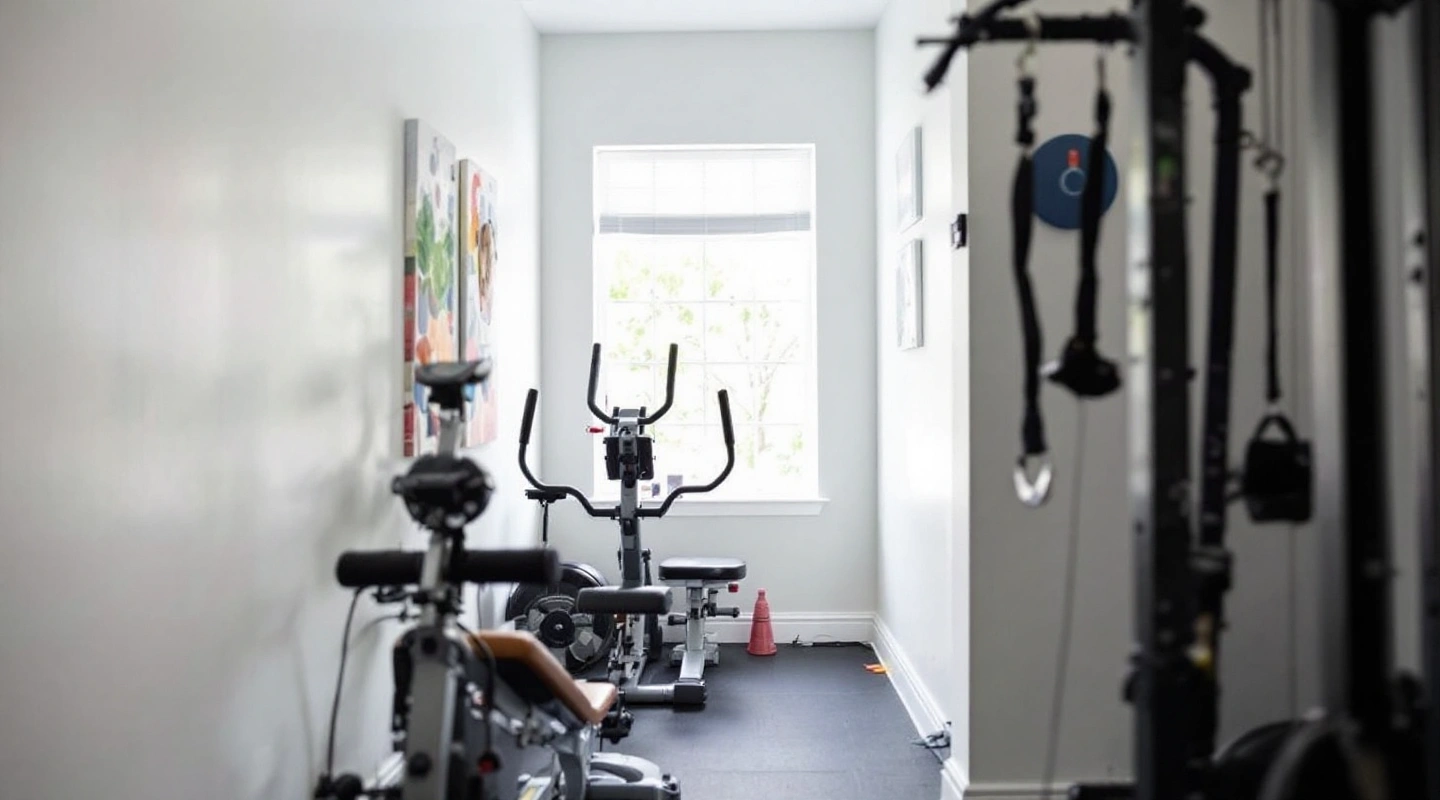
Instead of spreading a bench, dumbbells and a mat across a room, pick one wall or corner and stack your plan around it. A wall-mounted folding bench can fold to under a foot of depth against that wall. A shelf above or beside it can hold adjustable dumbbells in the same footprint. The rest of the room stays usable.
Wall-mounted gear gives back the most floor
If you have a stud-backed wall, wall-mounted gear gives back more floor than any freestanding option, because it stores upright instead of flat. A folding bench built for wall mounting can fold to a few inches deep rather than sitting on the floor. The trade-off is real. You need an actual stud, and the hardware is not meant for drywall alone, so confirm the stud before you plan around it.
No wall access? Plan the floor spot first
If drilling isn't an option, freestanding folding gear is the fallback. That covers renters, walls with no reachable stud and shared walls. Folding gear still needs somewhere to go once folded, so decide that spot before you buy. Under a bed, in a closet or leaned in a corner all work. A folded bench with no set spot tends to stay unfolded in the middle of the room, which defeats the point.
One multi-use piece beats several single-use ones
A single pair of adjustable dumbbells can replace a full rack of fixed weights. It shrinks a long shelf of gear into one object's footprint. The same logic applies to a bench with incline and decline settings instead of separate flat and incline benches. Fewer, more adjustable pieces usually beat more single-purpose ones when both floor and shelf space are tight.
Match flooring to the corner, not the whole room
Dropped weights and gear feet need flooring that protects the floor below. Thick gym flooring eats into a small room's usable space on its own, though. A bodyweight and dumbbell corner needs far less cushioning than a spot for dropped plates. Size the flooring to the corner you planned, not the room. Our flooring for home gym guide explains which thickness suits which load.
Store the small stuff where you can see it
Bands, a jump rope and a suspension strap kit take almost no space, but they vanish into drawers and never get used. Hang them on a hook or a peg rail on your training wall. Seeing them next to the bench makes it more likely you will pick them up.
Putting it together
- Pick one wall or corner as the anchor for your setup.
- Check for a stud if you want wall-mounted gear. Plan a floor or closet spot if you don't have one.
- Choose multi-use pieces like adjustable dumbbells and an adjustable bench over single-purpose gear.
- Size flooring to the corner, not the room.
When you are ready to shop for the pieces, the small-room picks cover benches and dumbbells, plus bands and folding cardio, in one place.
Our verdict on home gym ideas small spaces can use
The home gym ideas small rooms benefit from most all come back to storage. Anchor the setup to one wall, choose gear that folds or stacks, and give every piece a home when you are done. For the gear behind these ideas, see the compact home gym hub, the folding weight benches comparison or adjustable dumbbell stand options for keeping dumbbells tidy. For one multi-station frame sized for a small room, see compact home gym systems.
Questions people also ask
What is the single best small home gym idea for a bedroom or apartment?
Pick one wall or corner and build around it, rather than scattering gear. A wall-mounted folding bench like the Valor Fitness DA-4 folds to 8.5 inches of depth (Valor Fitness), so that same wall spot can hold a bench and a shelf for adjustable dumbbells without taking floor space when you are not training.
Do I need a dedicated room for a small home gym, or can it share space?
Sharing works if the gear folds or stores away fully between uses. A corner that holds a folded bench and a stand of adjustable dumbbells can be a reading nook or storage spot the rest of the day. The gear has to leave the floor, not just get pushed to one side.
What if I don't have a wall I can drill into?
Freestanding folding gear skips the wall mount, but it needs its own floor or closet spot when folded. Plan that spot before you buy, the same way you would plan a wall spot for a mounted piece.