
9 Best Small Home Gym Equipment Picks That Save Space in 2026
As an Amazon Associate, this website earns from qualifying purchases.
The short answer
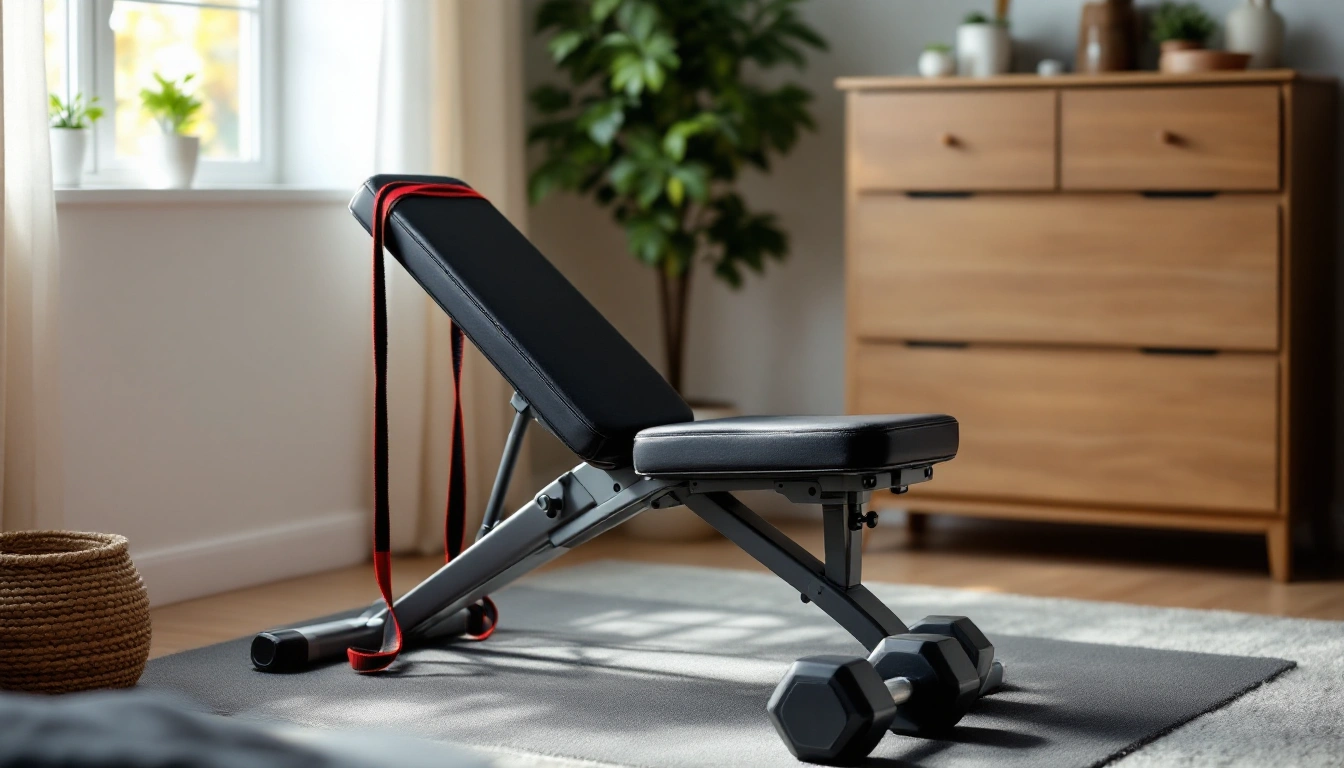
The Bowflex SelectTech 552 dumbbells are the single best piece of small home gym equipment, since one pair replaces a rack of weights. Pair them with the PRx Profile Flat Folding Bench, or the Marcy SB-7485 folding bench if you can't drill.
Last updated October 2026
Contents17
- #1. Bowflex SelectTech 552: best space saver overall
- #2. PRx Profile Flat Folding Bench: best wall-mounted bench
- #3. Marcy SB-7485 Folding Adjustable Bench: best bench if you can't drill
- #4. PowerBlock Elite EXP: best dumbbells to grow into
- #5. Bodylastics Basic 5-Band Set: best resistance bands
- #6. TRX All-in-One Suspension Trainer: best for bodyweight training
- #7. XTERRA TRX1000 Treadmill: best folding treadmill
- #8. Exerpeutic Folding Exercise Bike: best folding bike
- #9. ProsourceFit 3/4-inch Puzzle Mat: best flooring for a small room
- Factors to consider when choosing small home gym equipment
- How we picked small home gym equipment
- Matching the gear to your goal
- A sample setup for a spare bedroom
- Noise and neighbors
- Setup and storage notes
- What to check before buying any piece
- Our verdict on small home gym equipment
Our top 9 picks
- 1Best space saver overall
 Bowflex SelectTech 552 Adjustable Dumbbells (Pair)
- Dials set each dumbbell from 5 to 52.5 lb
- Stands in for 15 separate weights
- Metal plates with a locking system and a non-slip handle
- 2Best wall-mounted bench
 PRx Performance Profile Flat Folding Bench
- Wall-mounted flat bench that folds up close to the wall
- Made to pair with PRx Profile ONE, PRO and Murphy racks
- Arrives assembled; mounts to wall studs with the included hardware
- 3Best bench if you can't drill
 Marcy SB-7485 Folding Adjustable Bench
- Eight back and five seat positions
- Folds to 34 x 15 x 10 in; full size 68 x 15 x 46 in
- No frame assembly; carry handle and vinyl pads
- 4Best dumbbells to grow into
 PowerBlock Elite EXP Stage 1 Adjustable Dumbbells (Pair)
- 5 to 50 lb per hand, with a 2.5 lb adder for half steps
- Block measures 12 x 6 x 6 inches
- Stage 2 and 3 kits, sold separately, reach 70 and 90 lb
- 5Best resistance bands
 Bodylastics Basic Series 5-Band Resistance Set
- Five bands with 95 lb stated tension per side, 190 lb combined
- Inner-cord design; tension changes as bands stretch
- Handles, ankle straps, door anchor and carry bag
- 6Best for bodyweight training
 TRX All-in-One Suspension Trainer
- Bodyweight suspension strap system
- Indoor and outdoor anchors plus a mesh bag
- Safety tested to 700 lb, per TRX
- 7Best folding treadmill
 XTERRA Fitness TRX1000 Compact Folding Treadmill
- 2.25 HP motor
- 16 x 50 in running surface
- Folding deck for storage
- 8Best folding bike
 Exerpeutic Folding Magnetic Exercise Bike
- 8 levels of magnetic resistance
- 300 lb capacity, 39 lb bike
- Folds to about 20 x 22 x 55.5 in, with wheels
- 9Best flooring for a small room
 ProsourceFit 3/4-inch Extra Thick Exercise Puzzle Mat
- Six 24 x 24 in tiles plus 12 end borders cover 24 sq ft
- High-density 3/4-inch EVA foam, free of phthalates
- Textured non-skid top, water resistant and noise reducing
Small home gym equipment is not about buying tiny versions of gym gear. It is about pieces that fold away, pack several tools into one, or shrink their footprint to what you need. A bench, a set of adjustable dumbbells and the right flooring do most of the work. Bands, a suspension trainer and folding cardio fill in the rest.
The nine picks below cover each of those types. Most small rooms end up with pieces from several of them rather than one winner.
#1. Bowflex SelectTech 552: best space saver overall
Bowflex SelectTech 552 Adjustable Dumbbells (Pair)
Our verdict:
Best space saver overall
Best for anyone replacing a full rack of fixed dumbbells.
View on Amazon- Dials set each dumbbell from 5 to 52.5 lb
- Stands in for 15 separate weights
- Metal plates with a locking system and a non-slip handle
- Storage trays included with the pair
Keep in mind: each dumbbell is long and sits best in its base or on a stand.
Product details checked September 2026
Standout: a dial sets each dumbbell from 5 to 52.5 lb across 15 settings, and each one measures 16.9 x 8.3 x 9 inches (Bowflex). One pair does the job of a long shelf of fixed weights.
#2. PRx Profile Flat Folding Bench: best wall-mounted bench
PRx Performance Profile Flat Folding Bench
Our verdict:
Best wall-mounted bench
Best for a room where the bench must fold flat to the wall between sessions.
View on Amazon- Wall-mounted flat bench that folds up close to the wall
- Made to pair with PRx Profile ONE, PRO and Murphy racks
- Arrives assembled; mounts to wall studs with the included hardware
Keep in mind: it needs wall studs and the included hardware.
Product details checked September 2026
Standout: PRx lists it at 17 x 12 x 45 inches in use, folding to a 61-inch stowed height against the wall (PRx Performance). It arrives assembled and pairs with PRx's folding racks.
#3. Marcy SB-7485 Folding Adjustable Bench: best bench if you can't drill
Marcy SB-7485 Folding Adjustable Bench
Our verdict:
Best bench if you can't drill
Best for renters or anyone without a stud wall.
View on Amazon- Eight back and five seat positions
- Folds to 34 x 15 x 10 in; full size 68 x 15 x 46 in
- No frame assembly; carry handle and vinyl pads
- Maker states 600 lb total load; manual limits user to 300 lb
Keep in mind: it still needs a 34 by 15 by 10 inch storage spot.
Product details checked October 2026
The Marcy SB-7485 maker page lists eight back and five seat positions, a carry handle and double-stitched vinyl pads. It ships without frame assembly. Its manual gives a fold of 34 by 15 by 10 inches and a full size of 68 by 15 by 46 inches. Measure the bed gap and the open floor space before you buy.
#4. PowerBlock Elite EXP: best dumbbells to grow into
PowerBlock Elite EXP Stage 1 Adjustable Dumbbells (Pair)
Our verdict:
Best dumbbells to grow into
Best for lifters who expect to pass 50 lb per hand.
View on Amazon- 5 to 50 lb per hand, with a 2.5 lb adder for half steps
- Block measures 12 x 6 x 6 inches
- Stage 2 and 3 kits, sold separately, reach 70 and 90 lb
- 5 year residential warranty
Keep in mind: the square block feels different from a round dumbbell.
Product details checked September 2026
Standout: 5 to 50 lb per hand in a 12 x 6 x 6 inch block. PowerBlock sells Stage 2 and Stage 3 kits later to reach 70 and then 90 lb per hand (Rogue Fitness).
#5. Bodylastics Basic 5-Band Set: best resistance bands
Bodylastics Basic Series 5-Band Resistance Set
Our verdict:
Best resistance bands
Best for accessory work, mobility and travel with near-zero storage.
View on Amazon- Five bands with 95 lb stated tension per side, 190 lb combined
- Inner-cord design; tension changes as bands stretch
- Handles, ankle straps, door anchor and carry bag
Keep in mind: band tension is lightest at the start of a rep, so it won't replace a heavy dumbbell for max strength.
Product details checked October 2026
Standout: the Basic set has five bands whose stated tensions add up to 95 lb per side, or 190 lb combined. Band tension changes with stretch; that number is not a fixed dumbbell load. The set includes handles, ankle straps, a door anchor and a carry bag.
#6. TRX All-in-One Suspension Trainer: best for bodyweight training
TRX All-in-One Suspension Trainer
Our verdict:
Best for bodyweight training
Best for bodyweight strength and conditioning with nothing left on the floor.
View on Amazon- Bodyweight suspension strap system
- Indoor and outdoor anchors plus a mesh bag
- Safety tested to 700 lb, per TRX
Keep in mind: it needs a solid door, beam or rack to anchor to.
Product details checked September 2026
Standout: the kit includes the strap system, anchors for indoors plus outdoors, and a mesh bag. TRX says it is safety tested to support up to 700 lb.
#7. XTERRA TRX1000 Treadmill: best folding treadmill
XTERRA Fitness TRX1000 Compact Folding Treadmill
Our verdict:
Best folding treadmill
Best for walking and easy runs in a room that can't hold a full-size treadmill.
View on Amazon- 2.25 HP motor
- 16 x 50 in running surface
- Folding deck for storage
Keep in mind: the 250 lb user limit is lower than larger folding models.
Product details checked September 2026
Standout: a 2.25 HP motor, a 16 x 50 inch running surface and a folding deck. XTERRA lists the folded size at 28.7 x 29.5 x 60.8 inches and the weight at 103.6 lb (XTERRA Fitness).
#8. Exerpeutic Folding Exercise Bike: best folding bike
Exerpeutic Folding Magnetic Exercise Bike
Our verdict:
Best folding bike
Best for low-impact cardio that tucks into a corner or closet.
View on Amazon- 8 levels of magnetic resistance
- 300 lb capacity, 39 lb bike
- Folds to about 20 x 22 x 55.5 in, with wheels
Keep in mind: it fits riders from about 5 feet 3 inches to 6 feet 1 inch, so very short or tall riders should check fit.
Product details checked September 2026
Standout: 8 levels of magnetic resistance and a 300 lb capacity at just 39 lb. The listing gives 20 x 22 x 55.5 inches folded, with wheels for moving it.
#9. ProsourceFit 3/4-inch Puzzle Mat: best flooring for a small room
ProsourceFit 3/4-inch Extra Thick Exercise Puzzle Mat
Our verdict:
Best flooring for a small room
Best for a bench and dumbbell corner that needs a protected floor.
View on Amazon- Six 24 x 24 in tiles plus 12 end borders cover 24 sq ft
- High-density 3/4-inch EVA foam, free of phthalates
- Textured non-skid top, water resistant and noise reducing
Keep in mind: foam can dent under gear that never moves.
Product details checked September 2026
Standout: six 24 x 24 inch tiles cover 24 square feet, so you can floor just the training corner. ProSource points to this tier once heavier gear sits on the floor (ProSource).
Factors to consider when choosing small home gym equipment
None of these types compete for the same job. That is why a small room usually ends up with pieces from several groups.
A bench that folds flat or mounts to a wall
"Foldable" on a bench listing can mean a bracket-mounted bench that folds to a few inches of wall depth. It can also mean a freestanding bench that folds onto itself and still needs a floor or closet spot. The spec sheet tells you which.
The Valor Fitness DA-4 is a clear example of the first kind. It measures 47 x 12 x 17.5 inches set up and folds back to 8.5 inches from the wall. It is rated 1,200 lb static and 660 lb dynamic (Valor Fitness).
The PRx Profile bench works the same way at a larger size. Both need real wall studs and the hardware they ship with. If you can't drill, a freestanding folding bench skips that step but keeps its folded footprint on the floor.
Dumbbells instead of a rack
A set of fixed dumbbells from 5 to 50 lb takes a long shelf or a dedicated rack. One adjustable pair does the same job in about the footprint of one. For storage, the adjustable dumbbell stand guide covers stands for both the Bowflex and PowerBlock lines.
If a bench alone doesn't give enough incline and decline range, our adjustable weight bench hub compares multi-angle benches by angle count and capacity. Those don't fold flat, so weigh angle range against storage.
Bands and suspension training
A band set packs into a bag smaller than one dumbbell. Bodylastics also sells a 7-band Pro set that reaches 400 lb combined and a 16-band set that reaches 1,040 lb (Bodylastics). The key difference from a dumbbell is how the load behaves. A band's tension is lowest at the start of a move and rises as it stretches, while a dumbbell stays the same through the whole rep. That makes bands a strong partner to dumbbells rather than a full swap for heavy pressing or pulling.
A suspension trainer swaps outside weight for your own body weight and a strap angle. It needs no floor space once you are done, just a solid anchor point like a door or beam. TRX's Home2 kit, a sibling of our pick, rates its straps and handles for users up to 350 lb and weighs 1.5 lb (TRX). Changing your body angle changes the load, so one strap set scales from an easy row to a hard single-leg squat.
Folding cardio
Cardio gear makes the same trade between working size and stored size as a folding bench. XTERRA's larger TRX3500 treadmill trades the TRX1000's small fold for a 350 lb user limit and a bigger 51.2 x 35.5 x 65.8 inch folded footprint (XTERRA Fitness). That is the same pattern seen across strength gear: more capacity usually costs some stored space. Check the published folded size, not just the word "foldable."
Flooring sized to what you drop
Dropped weights and gear feet need flooring that won't let the floor below dent. Thick flooring eats into a small room's usable space, though. A bodyweight and dumbbell corner needs far less cushioning than a spot under a squat rack. Our flooring for home gym hub breaks down the tiers, from 1/2-inch foam for light use to rubber for a rack corner.
How we picked small home gym equipment
We looked for gear that saves space in a way you can measure: a stated folded depth, a stated folded size or one item that replaces several. We compared maker specs from Bowflex, PRx Performance, Valor Fitness, Bodylastics, TRX and XTERRA with each Amazon listing. We did not test this gear by hand. Specs and stock change, so check the current listing before you buy.
We left out full-size racks and cable machines, since they don't fold or pack away. The Valor DA-4 appears in our notes as a spec benchmark, but we did not find an Amazon listing we could check for it, so the PRx bench takes the wall-bench spot.
Matching the gear to your goal
- Loaded strength work in the smallest stored footprint: a wall bench plus adjustable dumbbells.
- Strength work without drilling: the Marcy SB-7485 folding bench, or a band set.
- Accessory work with zero stored footprint: resistance bands. Nothing else here stores as small.
- Bodyweight conditioning with a sliding difficulty scale: a suspension trainer and a solid anchor point.
- Cardio in the same small room: a folding treadmill or folding bike, matched to the user limit you need.
- Barbell work: that is a separate choice. See folding squat rack for wall-mounted racks, or squat rack vs. Smith machine vs. power rack to pick a rack type.
A sample setup for a spare bedroom
Here is how the picks fit together in a small room with one free wall. Mount the PRx bench to the studs on that wall. Set the Bowflex dumbbells on their base or a stand at one end of the bench. Lay a 24 square foot set of ProsourceFit tiles in front of the wall, so the bench and your feet sit on foam when it folds down.
Hang the band set and TRX straps on a hook by the door. When you are done, fold the bench up and the floor in front of the wall is clear again. The whole setup takes one wall and a few square feet of floor.
If you can't drill, swap the wall bench for the Marcy SB-7485. Its 34 by 15 by 10 inch fold needs a clear bed gap that size, plus room to slide it out. Check that gap before choosing this bedroom setup.
Noise and neighbors
Small rooms often sit in flats or above someone else's space. Set dumbbells down rather than dropping them, and train on the foam tiles. Bands and a suspension trainer make almost no noise at all, which is one more reason they suit a flat. A folding treadmill hums and thumps with each step, so check the building's rules and your neighbors' hours before you run early or late. A folding bike on a mat is one of the quieter cardio choices.
Setup and storage notes
The gear here falls into two setup groups. Wall-mounted pieces, like the PRx bench or a folding rack, need a stud finder and the maker's own hardware before they can hold real load. None of them are safe hung on drywall alone.
Freestanding pieces need no wall prep. That covers dumbbells, bands, a suspension trainer and folding cardio. A folding treadmill or bike still arrives needing some assembly of the base or handlebars. A suspension trainer is the one item that needs neither a stud nor a floor spot, just a solid door or beam to clip onto.
What to check before buying any piece
- Folded depth or footprint, in inches, from the maker's spec sheet.
- Whether it needs wall studs, and whether your wall has them.
- Weight capacity, static and dynamic if the maker lists both. A small footprint doesn't mean a lower rating.
- The stored footprint, measured against the exact spot you have.
- What the resistance type gives up. Bands and body-angle training are real tools, but neither replaces heavy outside load for max strength.
For the full room plan this gear fits into, see the compact home gym hub. If you are weighing one all-in-one machine against these pieces, compact home gym systems compares that trade-off.
Our verdict on small home gym equipment
The Bowflex SelectTech 552 is the best small home gym equipment buy, since one pair replaces a rack of weights. Add the PRx Profile Flat Folding Bench if you can drill, or the Marcy SB-7485 folding bench if you can't. Choose PowerBlock's Elite EXP to grow past 50 lb. Round out the room with Bodylastics bands, a TRX strap kit, a folding XTERRA treadmill or Exerpeutic bike, and ProsourceFit tiles.
Questions people also ask
What single piece of equipment saves the most space in a small home gym?
A pair of adjustable dumbbells, because it replaces a whole rack of fixed weights with one object. The Bowflex SelectTech 552 covers 5 to 52.5 lb per hand in a dumbbell measuring 16.9 x 8.3 x 9 inches (Bowflex). That is close to the footprint of one fixed dumbbell instead of fifteen pairs.
Do I need a rack in a small home gym?
Only for barbell work that needs a rack to load and unload safely. A bench and adjustable dumbbells cover a lot of strength training without one. If you want a rack, look at a folding or wall-mounted model rather than a fixed floor rack.
Does small equipment mean lower weight capacity?
Not always, so check the spec. The Valor Fitness DA-4 folds to 8.5 inches deep but is rated 1,200 lb static and 660 lb dynamic (Valor Fitness), which matches or beats many full-size flat benches.
Are resistance bands or a suspension trainer a real substitute for dumbbells and a bench?
For some goals, yes. For building maximum strength with heavy load, no. Bands add tension as they stretch, up to 190 lb combined on the Bodylastics 5-band set, and a suspension trainer uses body weight at an adjustable angle. Both pack into a bag, which makes them a real small-space option for general strength and conditioning.
Can I fit cardio equipment into a small home gym?
Some folding cardio machines are built for this. XTERRA lists the TRX1000 treadmill at a 28.7 x 29.5 x 60.8 inch folded footprint, 103.6 lb and a 250 lb user limit (XTERRA Fitness). Exerpeutic's folding bike lists 20 x 22 x 55.5 inches folded and a 300 lb capacity.