
How to Do a Kettlebell Row at Home
Set up a controlled kettlebell row with a stable support, clear floor space and simple form cues. Compare supported and unsupported versions.
Last updated November 2026
Contents5
A kettlebell row is a pulling exercise: bend at your hips, hold the bell below your shoulder, then draw your elbow back without turning your chest. It works the back and biceps. For a supported version, keep your free hand on a firm support while the other arm rows.
How to do a supported kettlebell row
Start with a bell you can move slowly. The aim is a steady pull, not a swing.
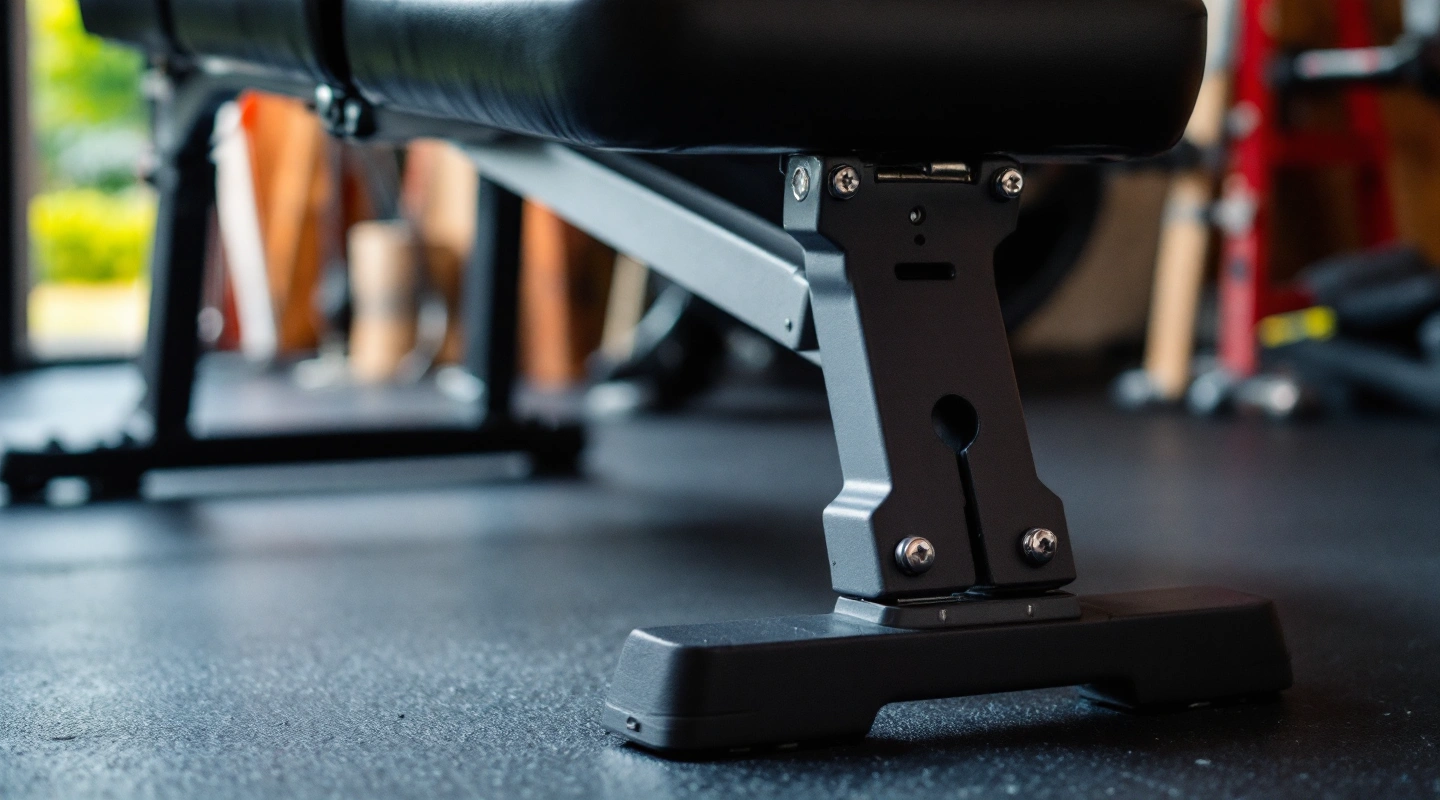
- Put a stable exercise bench on a level, clear floor. Check that its feet, adjustment pins and folding locks are secure before leaning on it.
- Hold the bell in one hand. Place your free hand on the bench and step the opposite foot forward into a staggered stance.
- Bend at your hips with your knees slightly bent. Brace your middle, keep your back in a steady position and let the loaded arm hang beneath your shoulder.
- Bend the working elbow and draw it backward beside your body. Keep your chest facing the floor rather than rolling it upward to finish the pull.
- Lower the bell slowly until your arm is extended again. Exhale as you pull and inhale as you lower. Set the bell down under control before switching sides.
Nuffield Health's kettlebell-row demonstration shows a single-arm version using a chair for support and a two-bell version. Watch the demonstration as well as reading the cues. Stop if the movement hurts rather than forcing the range.
Supported or unsupported?
Hand support gives you a point of contact while one arm moves. An unsupported row removes that contact: both feet stay on the floor while you hold the bent-over position yourself. The extra balance demand is a reason to start lighter, not a reason to rush to that version.
Bells of Steel's row tutorial describes both supported and unsupported approaches. Keep the basic movement the same when changing setup: a controlled pull with a steady torso. If holding the hinge becomes the limiting part, return to a supported version.
Two kettlebells let you row both arms together from a standing hinge. Nuffield demonstrates that as a separate variation. You do not need a pair to learn the single-arm row.
Set up the equipment and floor space
Leave a clear route for the bell from the floor to the hanging position. Move loose plates, shoes and the bell's storage base out of that route. Check the space beside the bench as well as the space it occupies while stored.
A folding bench needs to be fully opened and locked according to its manual. A compact stored size says little about whether it stays steady when you lean on one side. Our folding weight bench guide covers fold, lock and floor-space checks for folding benches.
Keep enough room to place the bell down without reaching around another machine. For the rest of the room, use the room-fit planner to arrange larger equipment, then check the actual movement space on the floor.
Keep the pull controlled
Avoid turning a row into a torso twist or a fast jerk from the floor. End the upward movement before you need to rotate your chest to lift farther. Reset if the support shifts or your back position changes.
The American Council on Exercise's single-arm row uses a dumbbell and bench. Its guidance emphasizes bracing, keeping the arm near the body and avoiding trunk rotation. Those are useful position checks here; its equipment instructions describe a different version.
Which weight should you use?
Choose by control rather than a fixed beginner number. You should be able to pick the bell up, row it and put it down without a heave or a turn of the torso. If you cannot keep that pattern, use a lighter bell or simplify the setup.
For an adjustable kettlebell, follow its own instructions for changing and securing the weight. A row tutorial cannot confirm that a particular selector or locking system is ready to lift. Keep the manual with the equipment and check it before each change.