
6 Best Adjustable Sit Up Weight Benches for Decline Ab Work in 2026
As an Amazon Associate, this website earns from qualifying purchases.
The short answer
The FLYBIRD WB5 is the best adjustable sit up weight bench for most homes, with a decline to minus 30 degrees and a frame that folds. For a bench that does only ab work, the Valor decline sit-up bench is simpler and sturdier.
Last updated September 2026
Contents10
- #1. FLYBIRD WB5: best overall sit-up bench
- #2. Valor Fitness Decline Sit Up Bench: best dedicated ab bench
- #3. Core Home Fitness FAB100: best compact decline bench
- #4. REP AB-3000 2.0: best for heavy loaded ab work
- #5. Marcy SB-350: best budget bench with leg rollers
- #6. RitKeep RAB-3000: best for fine angle control
- Factors to consider when choosing an adjustable sit up weight bench
- How we picked adjustable sit up weight benches
- A simple decline ab routine
- Our verdict on the adjustable sit up weight bench
Our top 6 picks
- 1Best overall sit-up bench
 FLYBIRD WB5 Adjustable Weight Bench
- 800 lb capacity, ASTM-certified per the listing
- Back pad runs from 90 degrees down to minus 30 degrees
- 30-inch backrest and spring-lock seat and back adjustment
- 2Best dedicated ab bench
 Valor Fitness Decline Sit Up Bench
- Fixed 20-degree decline
- 650 lb capacity on 2 x 2-inch steel tubing
- Lower foam roller adjusts from 11 to 12.5 inches
- 3Best compact decline bench
 Core Home Fitness FAB100 Foldable Adjustable Bench
- 600 lb capacity
- Eight back angles from upright down to minus 30 degrees
- Folds with a pin pull to about 28 x 13 x 10 inches
- 4Best for heavy loaded ab work
 REP AB-3000 2.0 FID Adjustable Weight Bench
- Eight back pad positions with laser-cut angle numbers on the ladder
- Flat, incline and decline use, with repositioned leg rollers
- Rubber-covered front and rear bases; wider rear base for side-to-side stability
- 5Best budget bench with leg rollers
 Marcy SB-350 Utility Bench with Leg Developer
- Six-position back pad: incline, flat or decline
- Built-in leg developer with foam rollers
- 600 lb maximum capacity
- 6Best for fine angle control
 RitKeep RAB-3000 Adjustable Weight Bench
- Maker states 1,300 lb total load capacity
- 10 back and 4 seat positions, including decline
- Transport wheels and handle; assembly required
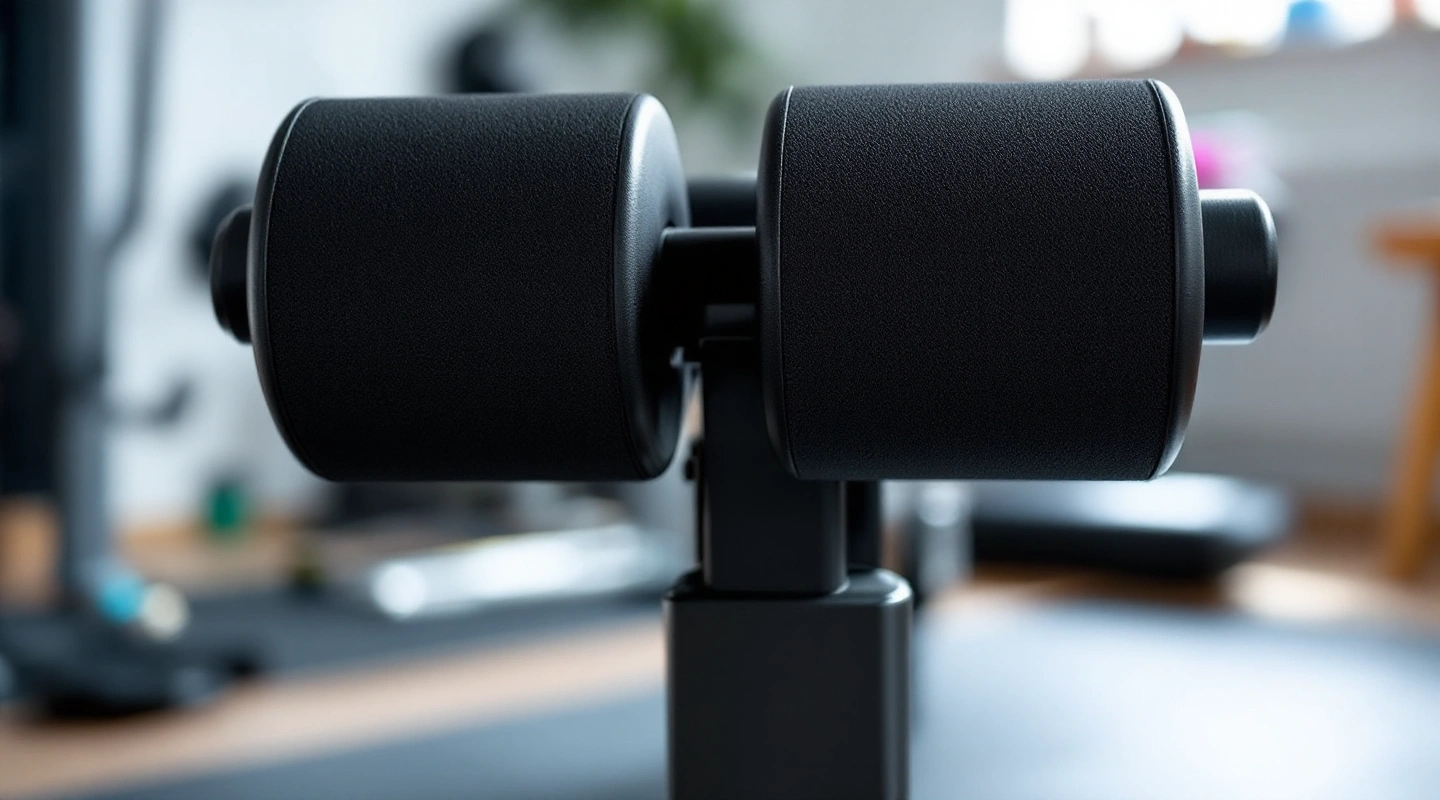
An adjustable sit up weight bench has to do two things. The back pad must go below flat, and something must hold your legs so you do not slide. Many benches say "adjustable" or "FID" on the box but stop at flat. Check the actual angle list before you buy one for ab work.
These six benches all reach a real decline and hold your feet. Most also work as a regular press bench, which saves space in a small gym.
#1. FLYBIRD WB5: best overall sit-up bench
FLYBIRD WB5 Adjustable Weight Bench
Our verdict:
Best overall sit-up bench
Best for small rooms that need decline ab work and pressing in one folding bench.
View on Amazon- 800 lb capacity, ASTM-certified per the listing
- Back pad runs from 90 degrees down to minus 30 degrees
- 30-inch backrest and spring-lock seat and back adjustment
- Folds in three steps; about 28.5 lb
Keep in mind: minus 30 degrees is steep, so beginners should start higher.
Product details checked September 2026
The WB5 lists a range from 90 degrees down to minus 30 degrees, with a gentler minus 10 degree step. It folds in three steps and weighs under 30 lb. See the FLYBIRD WB5 review for fit notes.
#2. Valor Fitness Decline Sit Up Bench: best dedicated ab bench
Valor Fitness Decline Sit Up Bench
Our verdict:
Best dedicated ab bench
Best for people who want a sturdy bench only for sit-ups, crunches and twists.
View on Amazon- Fixed 20-degree decline
- 650 lb capacity on 2 x 2-inch steel tubing
- Lower foam roller adjusts from 11 to 12.5 inches
Keep in mind: it is fixed at 20 degrees and cannot be used for presses.
Product details checked September 2026
Valor lists a fixed 20 degree decline on 2 by 2 inch steel, rated to 650 lb. The lower foam roller adjusts from 11 to 12.5 inches to fit different leg lengths. It does one job and does it without pins to set.
#3. Core Home Fitness FAB100: best compact decline bench
Core Home Fitness FAB100 Foldable Adjustable Bench
Our verdict:
Best compact decline bench
Best for apartments where the bench must fold small after each session.
View on Amazon- 600 lb capacity
- Eight back angles from upright down to minus 30 degrees
- Folds with a pin pull to about 28 x 13 x 10 inches
- Ships assembled; 10-year frame and 2-year parts warranty per the listing
Keep in mind: its 600 lb rating is lower than the other adjustable picks.
Product details checked September 2026
Core lists eight back angles, including minus 10 and minus 30 degrees, plus a removable foot stabilizer bar. It folds with a pin pull to about 28 by 13 by 10 inches.
#4. REP AB-3000 2.0: best for heavy loaded ab work
REP AB-3000 2.0 FID Adjustable Weight Bench
Our verdict:
Best for heavy loaded ab work
Best for lifters who add weight to decline sit-ups and also press heavy.
View on Amazon- Eight back pad positions with laser-cut angle numbers on the ladder
- Flat, incline and decline use, with repositioned leg rollers
- Rubber-covered front and rear bases; wider rear base for side-to-side stability
- Denser CleanGrip pads with a squared-off back pad
Keep in mind: REP says it does not store upright.
Product details checked September 2026
REP lists a lowest back angle of minus 12 degrees and a 1,000 lb rating. Its leg rollers lock in six spots, so you can set them back for clearance or forward for a firmer hold. See the AB-3000 2.0 review.
#5. Marcy SB-350: best budget bench with leg rollers
Marcy SB-350 Utility Bench with Leg Developer
Our verdict:
Best budget bench with leg rollers
Best for people who want decline sit-ups plus leg curls and extensions.
View on Amazon- Six-position back pad: incline, flat or decline
- Built-in leg developer with foam rollers
- 600 lb maximum capacity
- Transport handle and wheels
Keep in mind: its 600 lb rating and home-use build suit lighter training.
Product details checked September 2026
Marcy lists a six-position back pad that reaches decline, foam rollers and a built-in leg developer. The same rollers that hold your feet for sit-ups work for leg curls and extensions.
#6. RitKeep RAB-3000: best for fine angle control
RitKeep RAB-3000 Adjustable Weight Bench
Our verdict:
Best for fine angle control
Best for heavier lifters who want many small steps between angles.
View on Amazon- Maker states 1,300 lb total load capacity
- 10 back and 4 seat positions, including decline
- Transport wheels and handle; assembly required
Keep in mind: it is a large, heavy bench that needs its own floor spot.
Product details checked October 2026
RitKeep lists 10 back and 4 seat positions, decline included, with a 1,300 lb rating. Wheels and a handle help you move it.
Factors to consider when choosing an adjustable sit up weight bench
A real negative angle
The lowest back angle must be a number below zero. "Adjustable" alone does not promise that. REP's own spec for the AB-3100 lists 0 to 90 degrees, while its Amazon listing says FID. When sources disagree, confirm with the maker.
Something to hold your legs
Without leg rollers or a foot bar, a decline mostly makes you slide. Look for rollers that adjust to your leg length. Valor's lower roller moves between 11 and 12.5 inches. REP's rollers lock in six spots.
Match the angle to your level
REP's exercise guides put decline sit-ups and Russian twists in the "use the leg rollers" group. General coaching advice starts decline sit-ups at a moderate angle and treats steeper angles as harder, not better. A minus 12 degree setting is a mild decline. Minus 30 degrees is at the steep end. Start mild and work down.
Capacity if you add weight
Holding a plate or medicine ball adds load beyond body weight. Every pick here clears normal loaded ab work. The 1,000 lb and 1,300 lb benches leave the most headroom.
Storage
The WB5 and FAB100 fold small. The Valor bench and the AB-3000 2.0 stay set up. REP's FAQ says the AB-3000 2.0 cannot be stored upright.
How we picked adjustable sit up weight benches
We checked each Amazon listing for a stated negative angle and a leg hold. We then used REP's spec pages and the reviews cited in this cluster to fill in angle lists. We did not test these benches by hand. Specs change, so check the current listing before you buy.
A simple decline ab routine
Set the bench at a mild decline and lock your legs under the rollers. Do slow sit-ups, crunches and Russian twists. Keep your chin off your chest and move under control. When 15 clean reps feel easy, lower the bench one step or hold a light plate. REP's own guidance also suggests a backrest near 40 to 65 degrees for incline leg raises, which works your lower abs from the other end.
Our verdict on the adjustable sit up weight bench
The FLYBIRD WB5 is the best adjustable sit up weight bench for most small gyms, since it reaches minus 30 degrees and folds away. The Valor decline bench suits people who want a sturdy station for ab work only. The REP AB-3000 2.0 is the pick for heavy loaded sit-ups and heavy pressing on one bench.
Questions people also ask
What makes a bench good for decline sit-ups?
Two things: a back pad that goes below flat, and leg rollers or a foot bar to hold you in place. REP's AB-3000 2.0 has both, with a minus 12 degree setting and rollers that lock in six spots.
Does a flat-only bench work for sit-ups?
You can do flat crunches on any bench. A bench that stops at flat cannot give you the decline that makes a sit-up harder. REP's own spec for the AB-3100 lists no negative angle, so check before you buy it for ab work.
Is a steeper decline better?
Steeper is harder, not better. The FLYBIRD WB5 and Core FAB100 reach minus 30 degrees. The AB-3000 2.0 stops at minus 12. Match the angle to your level and work down over time.
Is a fixed ab bench better than an adjustable one?
A fixed bench like the Valor decline sit-up bench is simple and sturdy but does one job. An adjustable bench also covers presses and rows, which saves space in a small gym.