
REP AB-3000 2.0 FID Adjustable Weight Bench: Specs and Fit in 2026
As an Amazon Associate, this website earns from qualifying purchases.
The short answer
The REP AB-3000 2.0 FID adjustable weight bench has the widest angle range and the highest rating of REP's two home benches. REP says it does not store upright, so it suits a room where it can stay set up.
Last updated September 2026
Contents12
- How we picked the AB-3000 2.0 FID adjustable weight bench
- REP AB-3000 2.0 specs
- What the eight back-pad positions give you
- What changed from the original AB-3000
- What the 1,000 lb rating covers
- What the AB-3000 2.0 does well
- Where the AB-3000 2.0 falls short
- Who the AB-3000 2.0 FID adjustable weight bench suits
- How it compares with other benches we cover
- Alternatives to the AB-3000 2.0
- Setting it up well
- Our verdict on the AB-3000 2.0 FID adjustable weight bench
Our pick
- 1Best for a dedicated training corner
 REP AB-3000 2.0 FID Adjustable Weight Bench
- Eight back pad positions with laser-cut angle numbers on the ladder
- Flat, incline and decline use, with repositioned leg rollers
- Rubber-covered front and rear bases; wider rear base for side-to-side stability
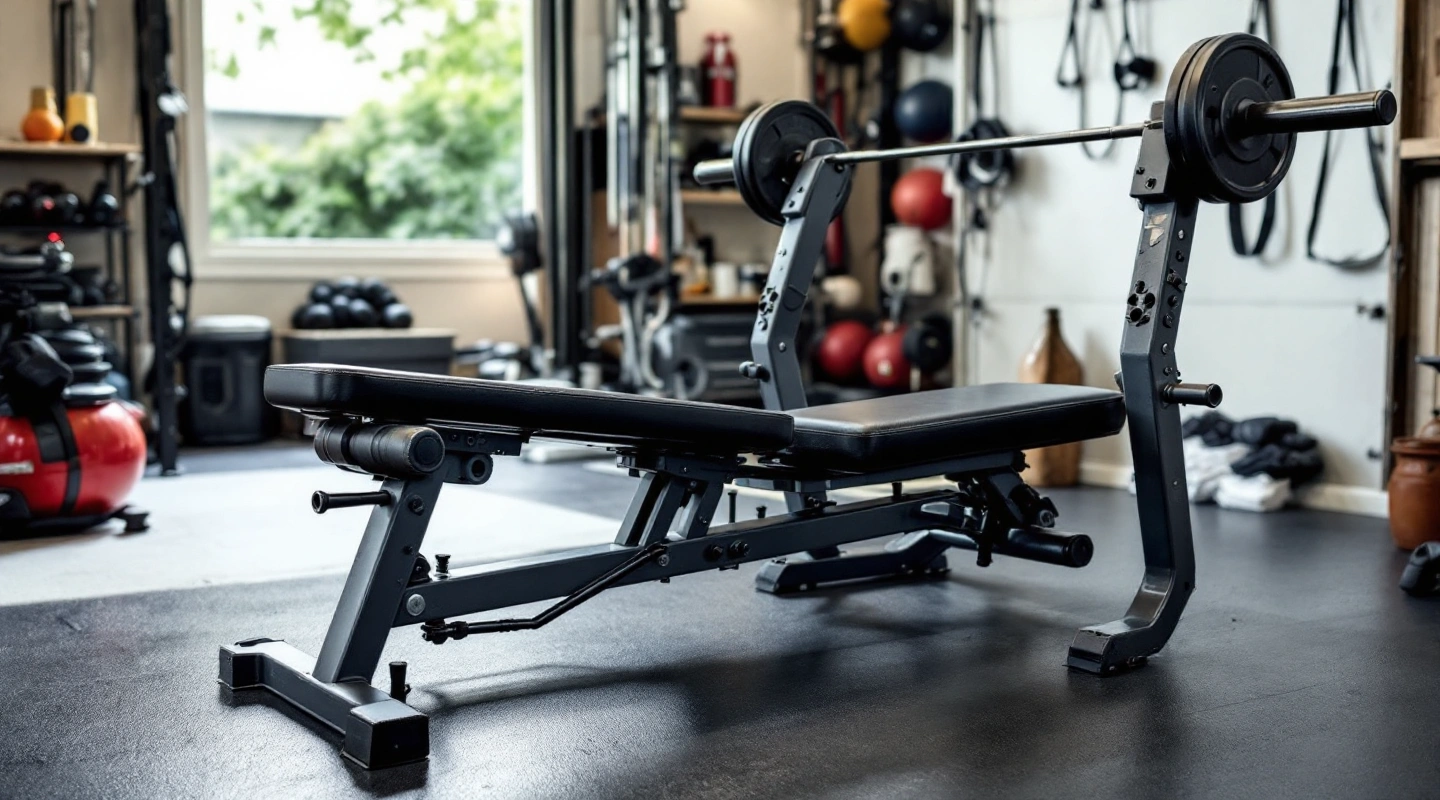
The REP AB-3000 2.0 FID adjustable weight bench is built around range. REP lists eight back-pad angles from a minus 12 degree decline up to 85 degrees, plus five seat angles. It all sits on an 11-gauge steel frame rated to 1,000 lb. That is the widest angle spread and the highest rating of the REP benches we cover. This review sets out what REP says it does, what a long-term reviewer found, and when another bench fits better.
The REP AB-3000 2.0 is a flat, incline and decline bench with eight back angles, leg rollers and a 1,000 lb rating. It is a strong pick for a dedicated corner. It is not a bench that folds or stands on end between sessions.
How we picked the AB-3000 2.0 FID adjustable weight bench
We read REP Fitness's product page and FAQ, the current Amazon listing and Gymcrafter's long-term review of the 2.0 update. We also used Garage Gym Lab's notes on the leg rollers. We then compared it with the other benches in this cluster. We did not test the bench by hand, so check the current listing before you buy.
REP AB-3000 2.0 specs
These figures come from REP Fitness unless noted.
- Capacity: 1,000 lb.
- Back pad angles: minus 12, 0, 15, 30, 45, 60, 70 and 85 degrees.
- Seat angles: 0, 5, 10, 15 and 20 degrees.
- Frame: 11-gauge steel.
- Footprint: about 56.6 by 25.8 by 17.1 inches, or 9.85 square feet.
- Weight: 89.3 lb.
- Pads: a 36-inch back pad about 11.8 inches wide, a 15 by 15 inch seat, a 2.1 inch pad gap and 7.7 inch leg rollers.
- Storage: REP's FAQ says it cannot be stored vertically.
REP AB-3000 2.0 FID Adjustable Weight Bench
Our verdict:
Best for a dedicated training corner
Best for lifters doing real incline and decline work who can give the bench a permanent spot.
View on Amazon- Eight back pad positions with laser-cut angle numbers on the ladder
- Flat, incline and decline use, with repositioned leg rollers
- Rubber-covered front and rear bases; wider rear base for side-to-side stability
- Denser CleanGrip pads with a squared-off back pad
Keep in mind: REP says it does not store upright, and the handle is bare metal.
Product details checked September 2026
What the eight back-pad positions give you
Eight steps from flat to 85 degrees give finer control over incline than a bench with four to six stops. That helps if you chase one exact angle for shoulder or upper chest work. The Amazon listing notes laser-cut numbers on the ladder, so you can see the angle as you set it.
The minus 12 degree setting, with the leg rollers, is what makes decline sit-ups and decline presses work. REP's rollers lock in six spots. You can set them farther back for decline clearance or farther forward for a firmer hold, per REP and Garage Gym Lab.
What changed from the original AB-3000
The 2.0 is an update, not a new design. The Amazon listing and REP's page point to five changes:
- Feet and base. The front and rear bases now carry rubber covers for grip and floor protection. The rear base is wider for side-to-side stability.
- Back angles. The pad now stops at eight common angles, with the numbers cut into the ladder.
- Leg rollers. The rollers gained more positions and a new horizontal handle that stays out of the way when you lift.
- Pads. The CleanGrip pads are denser, with smaller perforations and a squared-off back pad for more support.
- Handle. The handle moved to the leg attachment, which makes the bench easier to steer across the floor.
If you own the original, these are refinements. None of them change the core frame, the rating or the no-vertical-storage rule.
What the 1,000 lb rating covers
REP's rating is a combined figure. It covers your body weight plus whatever you press or rest on the bench. It is not 1,000 lb of barbell on top of a lifter. For most home dumbbell and barbell work, that leaves plenty of margin.
Treat any rating as a ceiling to stay well under, not a target. The extra headroom over a 700 lb bench matters most for a heavier lifter pressing a loaded bar directly over the pad.
What the AB-3000 2.0 does well
Stability. Gymcrafter's long-term review gave the bench a top score for stability. The reviewer credited the 89.3 lb frame and the 11-gauge steel for not flexing under heavy pressing. The rubber-covered feet and wider rear base also help it grip the floor, per REP.
Tighter adjustment. Gymcrafter found the 2.0 noticeably more stable than the original. The pins lock with a firm, solid feel instead of a loose metal rattle. The adjustment ladder also carries a plastic liner that damps noise.
The pad. REP calls the new vinyl CleanGrip. Gymcrafter said it was the first bench pad they did not feel a need to cover. The back pad is now a full 36-inch rectangle with firm edges, which holds its shape during kneeling rows.
Measured as promised. Gymcrafter's own measurements matched REP's footprint and pad sizes within REP's stated 3 percent tolerance.
Where the AB-3000 2.0 falls short
It stays out. REP's FAQ states plainly that the bench cannot be stored vertically. It covers more floor than the AB-3100 or a folded FLYBIRD WB5. If your plan depends on the bench vanishing after training, this is not that bench.
A bare handle. Gymcrafter flagged the handle as smooth, unknurled metal that can slip in a sweaty hand. Chalk or gloves close that gap when you move the bench.
Leg roller learning curve. Two removable pins let the rollers slide between six lock points. It works, but nothing on the bench labels which combination suits decline sit-ups versus decline presses. Expect a session or two of trial and error.
Pad shows dirt. REP says the smaller perforations in CleanGrip trap less dirt. Gymcrafter found that dirt still shows more readily on the surface than on plain vinyl. Both can be true. Wipe the pad with a damp cloth after sweaty sessions either way.
Weight to move. At 89.3 lb it is not a one-hand carry, and it has no wheels. REP does not publish an assembly time. Plan for a second person to help set the frame in place.
Who the AB-3000 2.0 FID adjustable weight bench suits
- Good fit: lifters who want a genuine decline, not just flat to incline.
- Good fit: heavier lifters who want headroom above a 700 to 800 lb rating.
- Good fit: anyone chasing a precise incline for shoulder or upper chest work.
- Less ideal: rooms with no floor space to give up full time.
- Less ideal: lifters who only press flat and at one incline, where a lighter bench does the job.
How it compares with other benches we cover
Next to REP's own AB-3100, the AB-3000 2.0 adds decline, two more seat angles and 300 lb more rating. It is also about 19 lb heavier and larger on the floor. The AB-3100 has wheels and a handle for rolling, which the AB-3000 2.0 lacks.
Next to the FLYBIRD WB5, the AB-3000 2.0 has the higher rating and the stiffer, heavier frame. The WB5 declines further, to minus 30 degrees, and folds for storage.
Alternatives to the AB-3000 2.0
- Need it to fold away: the FLYBIRD WB5 review covers a bench with deeper decline that folds.
- Want a lighter REP bench: the AB-3100 review covers REP's smaller, lower-rated model.
- Want to compare six benches at once: the best adjustable weight bench roundup ranks them by use.
- Mainly want decline ab work: the adjustable sit-up weight bench guide focuses on decline setups.
- Want a bench that mounts to a wall: the folding weight benches hub covers that category.
For REP's full specifications, see its AB-3000 product page. For the long-term durability notes, see Gymcrafter's review.
Setting it up well
Pick the spot first, since the bench will live there. Measure about 57 by 26 inches of clear floor, plus room to sit and lie down around it. Work out the leg roller pins for your decline sit-up and decline press before you need them under load. Check the pins seat fully at each new angle before you add weight.
On a finished floor, the rubber feet help, but a mat under the bench still spreads the load and stops scuffs. Wipe the pad after each sweaty session so the CleanGrip surface stays clean.
Our verdict on the AB-3000 2.0 FID adjustable weight bench
The REP AB-3000 2.0 FID adjustable weight bench is a strong pick for anyone doing real incline and decline work who can give it a permanent spot. Its range, rating and stable frame stand out. If the bench must fold away or stand on end, choose the FLYBIRD WB5 instead.
Questions people also ask
Can the AB-3000 2.0 decline for ab work?
Yes. REP lists a lowest back-pad setting of minus 12 degrees, and the bench ships with leg rollers to hold your legs during decline sit-ups or decline presses.
Is the AB-3000 2.0 a good fit for a small room?
Only if it can stay set up. REP's own FAQ says it cannot be stored vertically, and it covers about 9.85 square feet. If the bench must disappear between sessions, a folding bench fits a tight room better.
What changed in the 2.0 version?
REP added rubber covers on the base feet, a wider rear base, eight common back angles with laser-cut numbers and leg rollers that lock in six spots. Gymcrafter's long-term review also found tighter adjustment pins and a new CleanGrip pad that did not need a bench cover.
What are the downsides after months of use?
Gymcrafter flagged a bare, unknurled handle that can slip in sweaty hands. The leg-roller pins take some trial and error, since nothing on the bench labels which spot suits which angle. The CleanGrip pad also shows dirt more readily than plain vinyl.
How much does the AB-3000 2.0 weigh?
REP lists it at 89.3 lb, heavier than the AB-3100's roughly 70 lb. Gymcrafter credited that mass for its stability under heavy pressing, but it is not an easy one-person carry.
Who should skip the AB-3000 2.0?
Anyone who needs the bench out of the way between sessions, and anyone who never trains below flat. A folding bench like the FLYBIRD WB5 suits the first group, and the lighter AB-3100 suits the second.